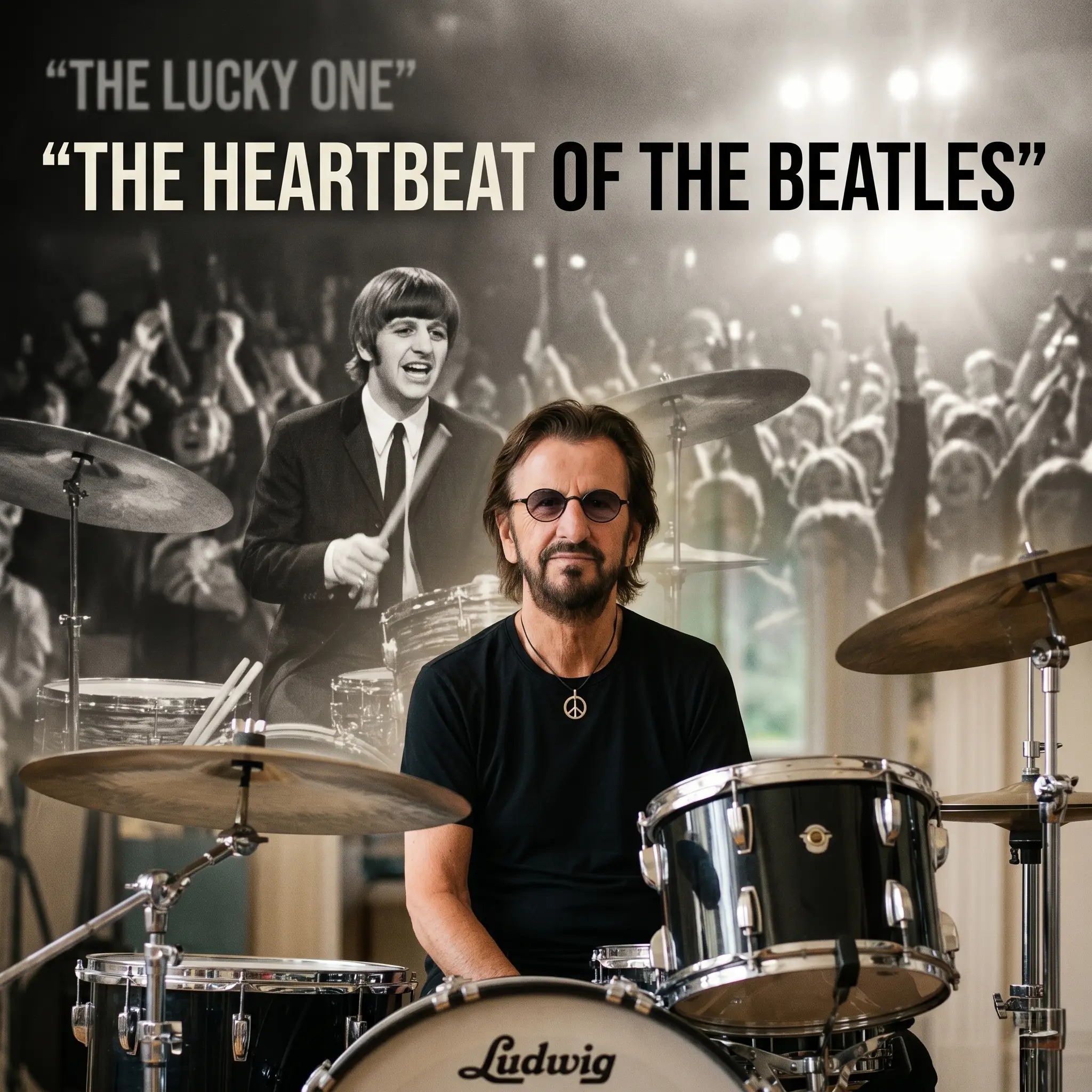
They Called Him “The Lucky One.” Said He Was the Easiest Beatle to Replace.
While Lennon and McCartney were hailed as geniuses, Ringo Starr was dismissed as the guy who just kept time.
The narrative followed him for decades. Critics sneered. Fans debated. Even some of his bandmates, in moments of frustration, wondered aloud if he was pulling his weight. The joke — cruel and persistent — was that Ringo wasn’t even the best drummer in The Beatles.
What they didn’t see was that he was rewriting what a drummer could be.
Left-handed, playing a right-handed kit — his fills sounded different. Off-balance. Human. Impossible to copy. He didn’t play with the technical precision of a jazz virtuoso or the explosive power of a rock showman. He played with feel. With intuition. With a deep understanding that the drums were not meant to stand out, but to hold everything together.
Listen closely to the records. The way his drums sit in the pocket on “Come Together.” The unpredictable fills on “A Day in the Life.” The raw, almost stumbling energy of “Rain.” None of it is accidental. None of it is replaceable.
He didn’t chase attention. He didn’t fight for the spotlight. He built something deeper.
When he briefly left The Beatles in 1968, the band struggled to find its rhythm. The sessions for the White Album became tense, fractured. Without Ringo’s steady presence, the remaining three members found themselves playing around each other, not with each other. The magic, such as it was, had become unmoored.
They sent him telegrams. Filled his drum kit with flowers. Asked him to come back.
Because suddenly… they understood.
Ringo wasn’t replaceable. He was essential.
He returned to a studio covered in blossoms, sat behind his kit, and the music clicked back into place. The Beatles could function without him, technically. They could hire another drummer to keep time. But they could not recreate the feeling — the subtle, almost invisible glue that made their sound unmistakably theirs.
Decades later, the dismissals have faded. The jokes have quieted. And Ringo Starr remains — the heartbeat of the most important band in history, still steady, still unshaken, still impossible to replace.
He never needed to be the genius. He needed to be the foundation. And that, perhaps, is the most essential role of all.
They called him the lucky one. But luck doesn’t last sixty years. Consistency does. Character does. The quiet confidence to know your role and fill it so completely that no one else can ever quite step into it — that’s not luck. That’s legacy.
And Ringo Starr wrote it not with words, but with rhythm. One beat at a time. For all the world to feel.