The Moment Paul McCartney Came Home: How “Here Today” Became the Soul of the Back in the World Tour
LONDON — The lights dimmed. The stadium held its breath. And one man, alone with an acoustic guitar, prepared to sing a letter he never got to send.
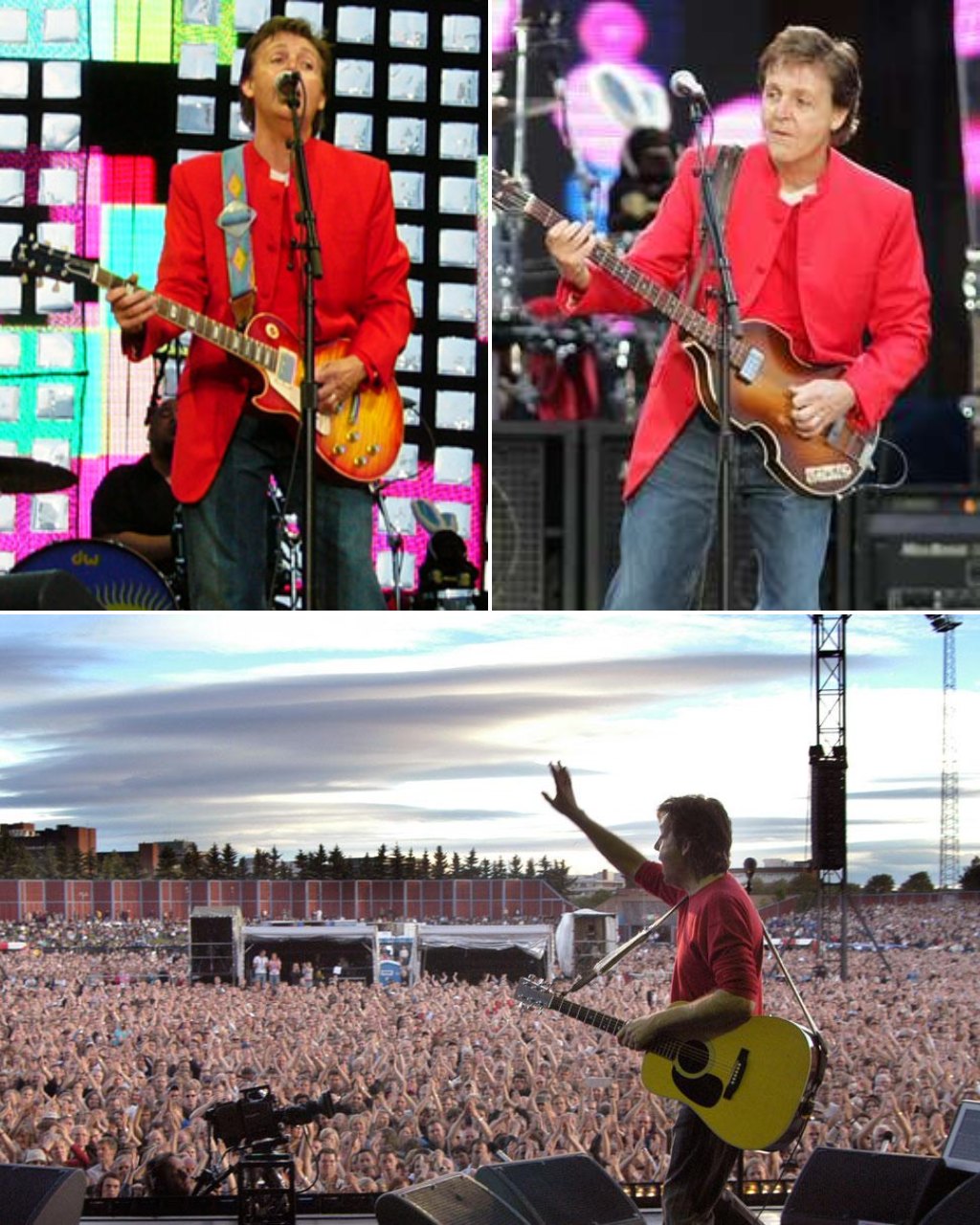
When Paul McCartney launched the Back in the World tour in 2003 — his first major European trek in a decade — fans expected the hits. They expected “Hey Jude” and “Live and Let Die” and the singalong moments that had defined his solo career. What they didn’t expect was to spend half a show weeping.
The tour was massive by any measure. State-of-the-art production. A setlist spanning six decades. But amid the spectacle, one simple acoustic moment carried more weight than any stadium anthem.
“Here Today.”
The Song Behind the Song
Written in 1982, “Here Today” is McCartney’s direct address to John Lennon — a conversation he never got to have. The lyrics imagine what he would say if he could sit across from his old partner one more time:
“And if I said I really knew you well / What would your answer be? / If you were here today / I’d tell you I loved you.”
It’s the most vulnerable moment in McCartney’s catalog. A love letter to someone gone too soon. An apology. A thank you. A goodbye.
For two decades, he performed it sparingly. The song cut too close. But on the Back in the World tour, after ten years away from European audiences, something shifted.
The Performance
Each night, the production fell away. No lights. No band. Just McCartney, a guitar, and 20,000 people holding their breath.
He would introduce it simply — talking about John, about the years, about the questions that never get answered. Then his fingers would find the opening chords, and the arena would dissolve into something that felt less like a concert and more like a vigil.
Fans who attended those shows still describe it as the moment everything changed.
“You could feel the grief in the room,” one recalled. “Not sad grief. Loving grief. Like everyone there had lost someone and was finally allowed to talk about it.”
Why It Landed So Hard
The Back in the World tour marked McCartney’s return to Europe after a decade-long absence. The wounds of the Beatles’ breakup had long since scarred. But something about being back on those stages, in those cities where it all began, opened old doors.
“Here Today” became the hinge.
Each performance was slightly different. Some nights his voice caught. Some nights he smiled through the tears. Some nights the crowd sang the last verse with him, their voices rising to fill spaces words couldn’t reach.
It wasn’t just a song about John anymore. It was a song about everyone the audience had lost. Every conversation left unfinished. Every “I love you” that never arrived in time.
Shared Memory
What made these performances transcendent wasn’t McCartney’s skill — though that was undeniable. It was the collective act of remembering.
For three minutes each night, 20,000 strangers became a family processing grief together. They held up lighters and phones. They sang along or stayed silent. They wept openly without embarrassment.
McCartney later reflected on why the song carried such weight.
“People come up to me and say, ‘That song made me think of my dad, my brother, my best friend.’ It’s not about John and me anymore. It’s about everyone. That’s what music does when it’s real.”
Coming Home
When the final chords faded each night, McCartney would sit in silence for a moment before standing. No bow. No wave. Just acknowledgment passing between him and the crowd that they had shared something sacred.
Many fans still describe that moment as the first time they truly felt Paul had come home again. Not to Liverpool. Not to the stage. Home to himself.
The stadium anthems were thrilling. The hits were essential. But “Here Today” was the reason those tours mattered.
Because some songs aren’t about performing. They’re about being present. And for a few minutes every night, Paul McCartney was exactly where he needed to be — alone with a guitar, singing to someone he loved, while the world listened in reverent silence.