Three Days After Its Release, He Played It Anyway — and the Room Went Silent
LONDON — June 4, 1967. A quiet theatre in London. And a song so new the ink on the label was barely dry.
“Sgt. Pepper’s Lonely Hearts Club Band” had been released just three days earlier. The Beatles’ magnum opus was still being absorbed by critics, still finding its way into record players across the world. No one had covered any of its songs yet. It felt too soon. Too sacred.
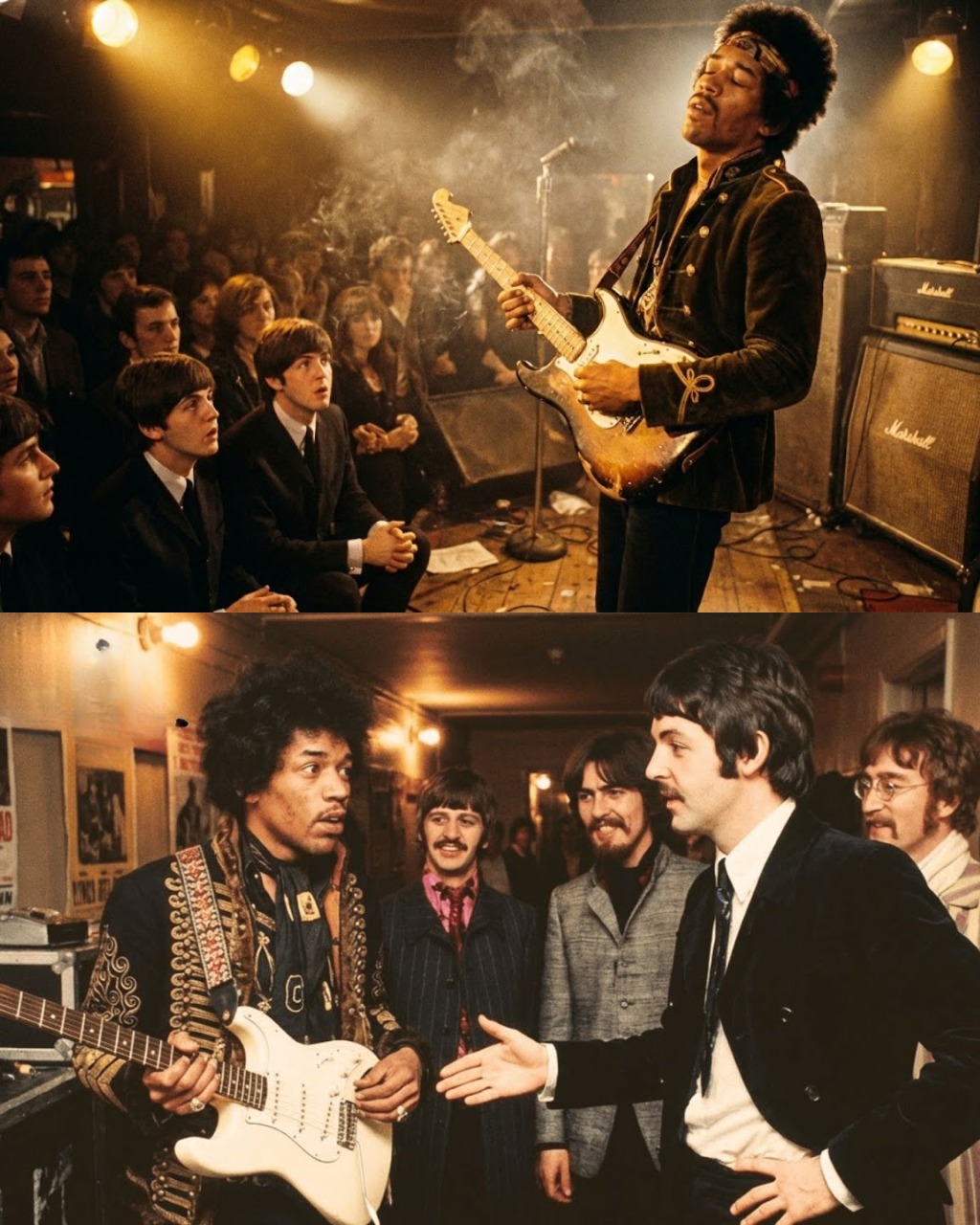
Then Jimi Hendrix walked onto a small stage at the Saville Theatre and changed everything.
The Choice
He didn’t have to play it. He could have stuck to his own material, to the blues standards, to anything safer. But Hendrix had heard “Sgt. Pepper” and understood immediately what it meant — not just for The Beatles, but for music itself.
So he picked up his Stratocaster and played the title track.
Not as imitation. Not as tribute in the conventional sense. He bent it. Stretched it. Let it breathe through his own hands until something familiar became something unrecognizable — yet deeply, unmistakably respectful.
What the Room Felt
Those present describe a collective intake of breath. Not the held breath of anticipation before a high note. Something quieter. Recognition that they were witnessing a moment between two kinds of genius, communicated without words.
Every note felt like a private conversation. Hendrix wasn’t performing for the audience. He was speaking to someone else entirely — someone who wasn’t even in the room.
But someone was.
Who Was Listening
In the audience that night sat Paul McCartney and George Harrison. They had come to see Hendrix perform, expecting an evening of brilliant guitar work. They didn’t expect to hear their own creation, barely 72 hours old, reinterpreted by one of the most revolutionary musicians alive.
McCartney later described the moment with undisguised wonder.
“It’s still probably the greatest compliment I’ve ever had paid to me in my life,” he said. “He’d learned it, just from hearing the record, and played it exactly right — but also made it his own. It was a hell of a moment.”
No Applause, Just Understanding
When the final notes faded, the room didn’t erupt. It sat in something rarer: silence that spoke louder than applause. Recognition passing between everyone present that they had witnessed something that could never be repeated.
Hendrix stepped back from the microphone. McCartney and Harrison sat motionless. No words exchanged. None needed.
Some moments aren’t about performance. They’re about connection — two kinds of genius, in different corners of the same art, understanding each other completely without explanation.
What Music Lovers Still Whisper
Decades later, the story still circulates among fans. Not as myth — as documented fact. June 4, 1967. A song three days old. A guitarist who heard the future and responded in real time.
What happened next is simple: music kept evolving. Hendrix kept pushing. The Beatles kept creating.
But for one night in a quiet London theatre, time stopped long enough for genius to recognize genius.
And the room went silent in a way only history ever remembers.