The Final Act: How Freddie Mercury’s Last Announcement Changed the World
In the final, fragile hours of his life, with his voice reduced to a whisper, Freddie Mercury made the loudest statement of his career. He chose truth over silence. On November 23, 1991, after a day of frantic negotiations with the press and his closest confidants, an announcement was issued to the world. It confirmed what millions had speculated for years: the iconic frontman of Queen was dying of AIDS.
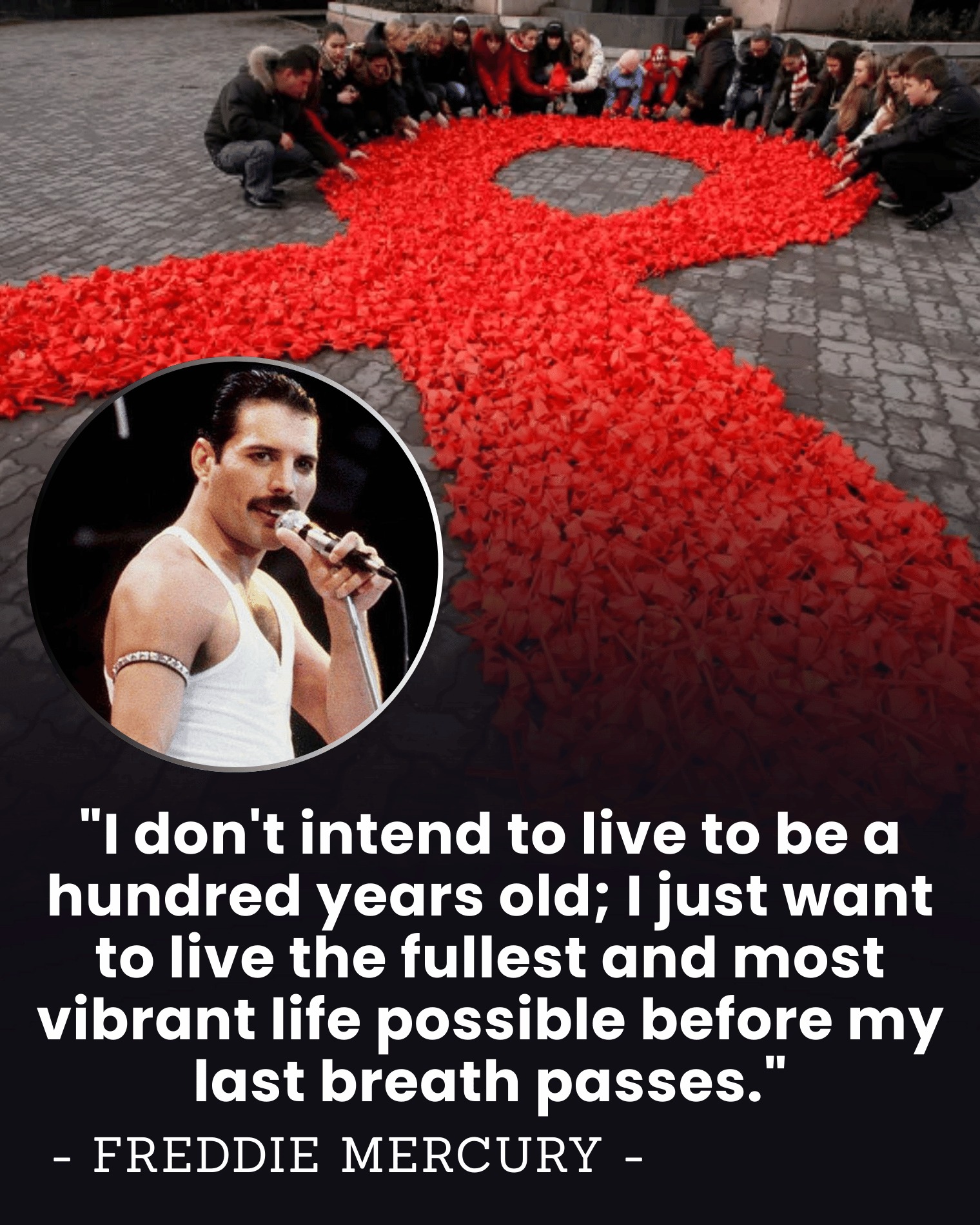
With that one, devastating announcement, Freddie Mercury did more than just end the rumor mill. In a single, masterful stroke, he transformed his private battle into a public stand. He took a disease shrouded in fear, ignorance, and immense stigma and placed it squarely in the global spotlight, turning it from a source of shame into a global call for dignity, compassion, and hope.
#### The Weight of Secrecy
For nearly four years, Mercury had lived under a cloak of secrecy. As his health visibly declined and Queen’s output slowed, the tabloid press went into a frenzy. His famously flamboyant frame became gaunt, fueling relentless speculation. Yet, Mercury remained defiantly silent, refusing to be defined by his illness or to have his life reduced to a headline. He poured his remaining energy into music, creating some of his most powerful and poignant work, including the epic “The Show Must Go On,” a direct reflection of his personal struggle.
But as his condition deteriorated, a new thought began to take hold. He saw the world’s reaction to AIDS—the moralizing, the blame, the utter lack of empathy. He saw friends and fellow artists suffering in silence, shunned by society. What compelled his final, fearless act was likely a combination of profound weariness, a desire for control over his own narrative, and a deep-seated understanding of the power he still held.
He could have slipped away quietly, leaving the gossip and stigma intact. Instead, he chose to use his final moment to shatter it.
#### The Announcement and a World Changed
The brief statement was both heartbreaking and defiant: *”Following the enormous conjecture in the press, I wish to confirm that I have been tested HIV positive and have AIDS… I felt it correct to keep this information private to date to protect the privacy of those around me. However, the time has come now for my friends and fans around the world to know the truth, and I hope that everyone will join with me, my doctors and all those worldwide in the fight against this terrible disease.”*
Less than 24 hours later, Freddie Mercury was gone.
The world didn’t just mourn a rock star; it was confronted with the human face of a pandemic it had been eager to dehumanize. Mercury’s death made the crisis undeniable. He was a superstar, a beloved genius, and he had been felled by a virus that many had dismissed as affecting only those on the fringes of society.
#### A Legacy Forged in the Fight
In the wake of his death, the other members of Queen—Brian May, Roger Taylor, and John Deacon—channeled their grief into action. They honored his final wish by organizing The Freddie Mercury Tribute Concert for AIDS Awareness. Held on Easter Monday, 1992 at London’s Wembley Stadium, it was one of the most monumental musical events in history.
Performances by Elton John, David Bowie, George Michael, Liza Minnelli, and Guns N’ Roses, among others, were beamed to a billion people worldwide. But the concert was more than just a tribute; it was a global education campaign. It distributed information about HIV prevention and risk reduction to a massive, mainstream audience, directly challenging the silence that had allowed the virus to spread.
The concert raised millions for AIDS charities and became a blueprint for future fundraising and awareness events. It helped to destigmatize the conversation around HIV, encouraging people to get tested and seek treatment. The Mercury Phoenix Trust, founded by the remaining Queen members and their manager Jim Beach, was established and continues to fund HIV/AIDS charities around the globe to this day.
Freddie Mercury’s final act was a strategic, powerful, and deeply human choice. He knew that his voice, even in its final hours, could do more than sing anthems. It could save lives. By turning his own death into a beacon of awareness, he helped drag the fight against HIV out of the shadows and into the light, proving that sometimes, the most powerful legacy is not the music you leave behind, but the future you help protect.