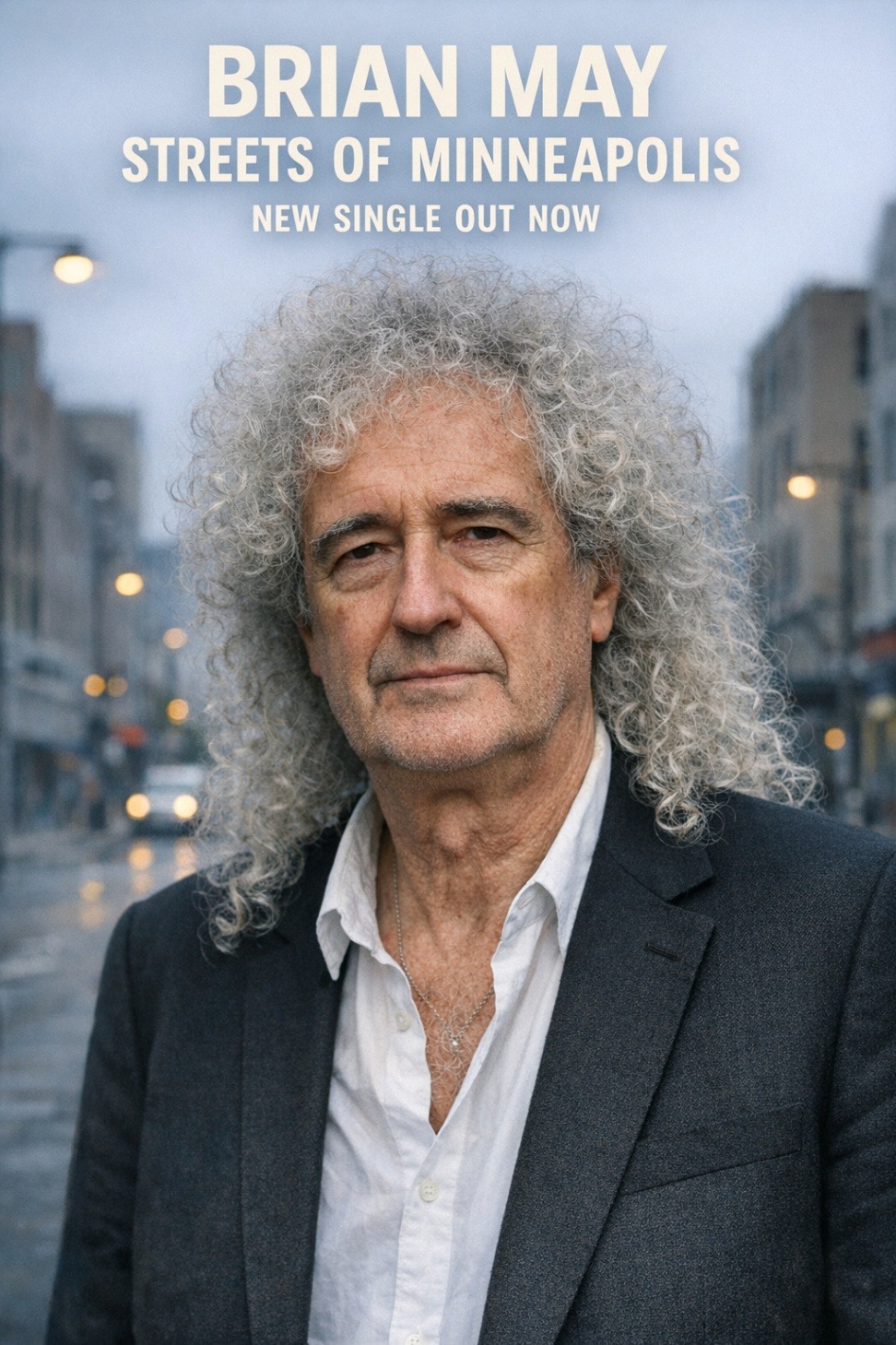
### **Echoes in the Silence: Brian May’s Haunting New Protest Ballad “Echoes of Minneapolis”**
In a move that merges the gravitas of a classical requiem with the raw nerve of a protest song, Queen guitarist Brian May has quietly released a powerful and unexpected new single, **“Echoes of Minneapolis.”** The track is a stark, haunting dedication to the people of Minneapolis and a solemn remembrance of Alex Pretti and Renee Good, two individuals whose deaths have become emblematic of community grief and the urgent cry for justice in the city.
Forgoing the stadium rock grandeur for which he is famed, May crafts a soundscape of profound intimacy and sorrow. The song unfolds not with a roar, but with the feeling of a **quiet lament drifting through frozen streets.** A somber, fingerpicked acoustic guitar melody—reminiscent of May’s work on Queen’s “No-One but You (Only the Good Die Young)”—forms the backbone, layered with mournful, wordless vocal harmonies that echo like ghosts in the mix.
Lyrically, the song is direct and devastating. It paints vignettes of a wounded community, of “lights left on in an empty room” and “names carved into the winter’s bark.” It speaks to the loss of innocent lives with a heartbreaking clarity, positioning their stories not as isolated tragedies, but as echoes in a pattern of pain. The central, chilling refrain—*“And the echo doesn’t fade, it just learns how to wait”*—serves as both a sorrowful farewell and an unignorable reminder that the demand for accountability remains.
This is where the song transforms from a ballad into a **bold statement of protest.** In a bridge that builds with tense, orchestral strings, May’s voice hardens as he condemns the forces he sees as perpetrators of injustice. He sings of **“King Trump’s private army,”** a pointed critique of the deployment of federal officers, and criticizes the “boot and the badge” of immigration authorities, underscoring the fear and trauma inflicted on communities.
“Echoes of Minneapolis” is ultimately a song of witness. It does not offer easy solace, but insists on the necessity of remembering. It is music as memorial and as missile—a carefully aimed note of solidarity from a rock legend using his platform not for nostalgia, but for a stark, contemporary reckoning. In its quiet power, May holds up a mirror to a nation’s ongoing strife, proving that the most resonant echoes are often those sung not in triumph, but in unwavering, grieving truth.