# **The Animated Breakthrough: The Story Behind Queen’s “Save Me”**
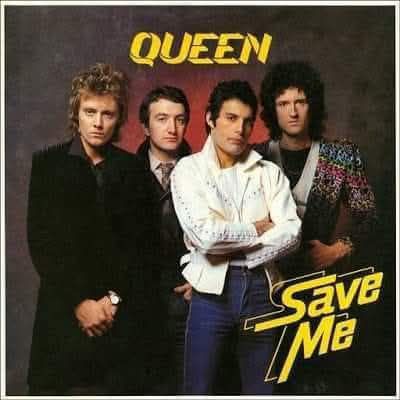
**January 25, 1980.** At the dawn of a new decade, Queen released a single that would quietly mark a pivotal moment in their storied career. “Save Me,” a powerful rock ballad composed by guitarist **Brian May**, arrived in UK shops not as part of a grand album rollout, but as a standalone statement—a poignant preview of the emotional and sonic landscape the band would explore on their forthcoming album, *The Game*.
Released a full four months before the album itself, the single was backed by a raw, energetic live version of “Let Me Entertain You” from their recent tours. This coupling showcased the band’s dynamic range: the B-side captured their legendary live ferocity, while the A-side revealed a newfound depth of vulnerability.
### **A Ballad Anchored in Emotional Truth**
“Save Me” stands as one of Brian May’s most personal and beautifully crafted compositions. Built around a majestic piano line (played by Freddie Mercury) and featuring May’s trademark, multi-tracked guitar harmonies, the song is a masterclass in building emotional intensity. Freddie Mercury’s vocal performance is a tour de force, moving from tender, plaintive verses to a soaring, cathartic chorus that pleads, “*Save me, save me, save me!*” The lyrics, dealing with heartbreak and the search for redemption, resonated deeply with fans, helping the single climb to a respectable **No. 11** on the UK Singles Chart.
### **A First for Queen: The Animated Video**
Perhaps the most historically significant aspect of the “Save Me” release was its promotional video. Conceived by Brian May, this was **the first Queen promotional film to feature animation.**
In an era where most music videos were simple performance clips, Queen opted for an artistic and symbolic approach. The video blended live-action footage of the band performing in a stark, dramatic studio setting with hand-drawn animated sequences. These animations visualized the song’s themes of isolation and yearning, featuring evocative imagery like a lone bird in flight and abstract, emotional landscapes. This creative risk demonstrated Queen’s forward-thinking approach to their visual identity, setting a precedent for the more conceptual videos that would define the MTV era just a few years later.
### **A Different Release Across the Globe**
The single’s journey varied internationally. While it was not released as a commercial single in the United States, it found a dedicated audience in Japan. In April 1980, Elektra Records Japan issued “Save Me” with a different B-side: a blistering live version of Roger Taylor’s “Sheer Heart Attack.” This pairing highlighted the songwriting strength of both May and Taylor, offering Japanese fans a unique collectible.
### **Legacy: The Quiet Precursor**
Though not one of their all-conquering No. 1 hits, “Save Me” holds a special place in Queen’s discography. It served as the perfect, emotional gateway to *The Game*, an album that would see the band decisively evolve their sound with synthesizers and new rhythms. The song remains a fan favorite and a staple of compilations, cherished for its raw emotional power and breathtaking musicality.
Most importantly, its animated video stands as a little-noticed landmark—a clear sign that Queen, ever the innovators, were already looking beyond the stage, using emerging visual media to deepen the storytelling of their music. It was a quiet, beautiful step into the future.