# **The Uninvited Salvation: How Billy Preston Walked Into The Beatles and Gave Them Back Their Groove**
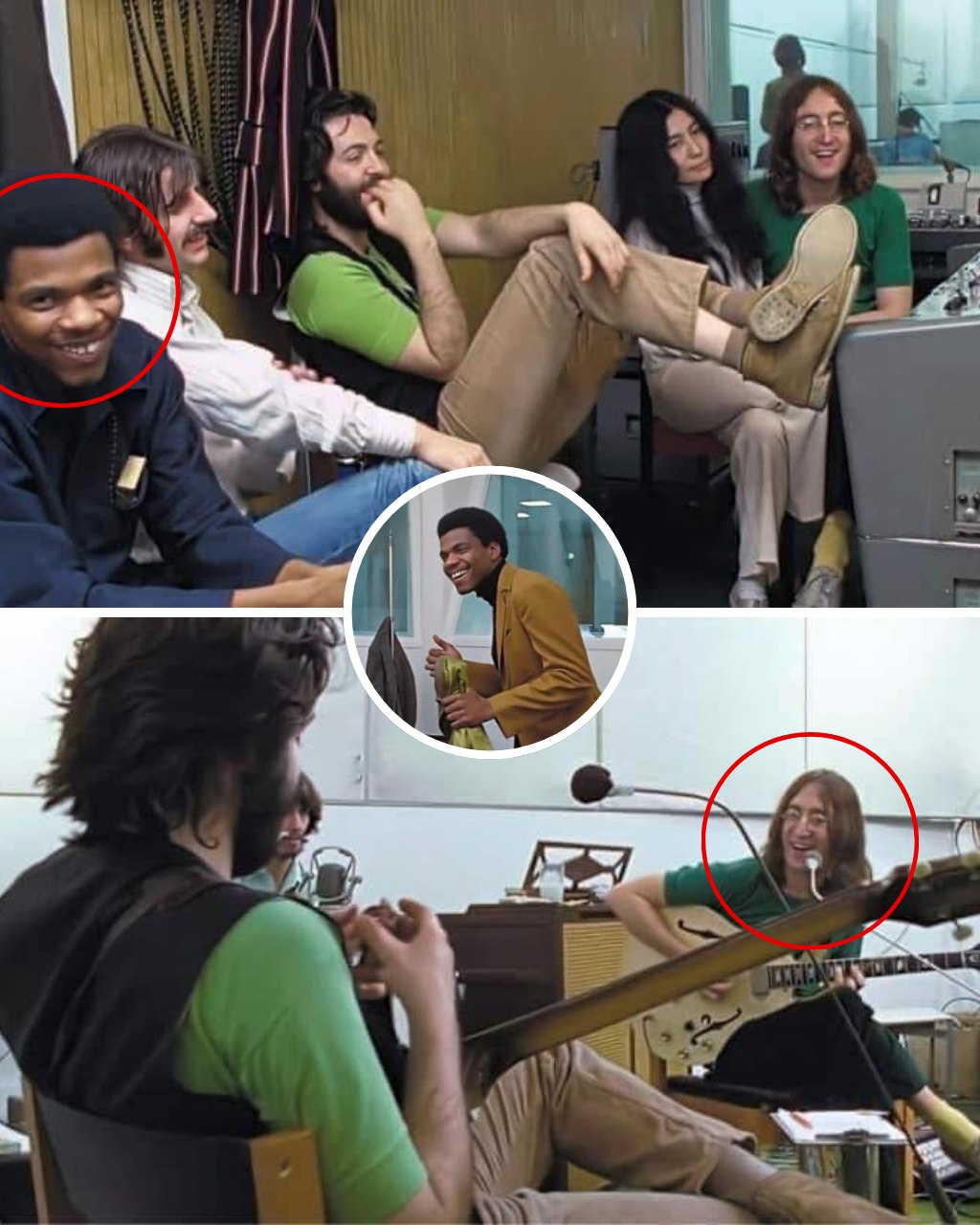
The date was January 22, 1969. The location: Apple Studios, Savile Row. The atmosphere: **thick as cold porridge.** The Beatles, filming what would become the *Let It Be* documentary, were trapped in a creative quagmire. The “Get Back” sessions were meant to be a back-to-basics return to their roots. Instead, they had become a stark exposure of frayed nerves, creative divergence, and a profound absence of joy. They were playing the songs, but the **glue was gone.**
Enter Billy Preston.
The American keyboardist, a friend since their Hamburg days, had come to London for his own work. He stopped by Apple that day simply to say hello. What he walked into was a band on the brink of a very public unraveling.
**The Alchemy of an Arrival**
Seeing the tension, George Harrison—who had worked with Preston on *The Concert for Bangladesh* and knew his genius—invited him to sit in. Preston, with characteristic humility, took a seat at the electric piano, almost as an observer. Then he began to play.
The effect was **instantaneous and transformative.** On “I’ve Got a Feeling,” his swirling, gospel-infused Wurlitzer parts filled the empty spaces the band had been glaring across. On “Don’t Let Me Down,” his soulful chords gave John Lennon’s raw, pleading vocal a bed of warmth it desperately needed. On “Dig a Pony,” his playful improvisation added a layer of spontaneity that had been missing for weeks.
He didn’t try to lead. He **listened.** He became the ultimate session musician, his playing acting as a **sonic mediator.** He gave McCartney’s bass a harmonic partner, gave Lennon’s rhythm guitar a melodic counterpoint, and gave Ringo’s drums a shimmering texture to play against. Most importantly, he gave the four Beatles a neutral, positive focal point—a reason to listen to the *music* again, instead of just each other’s grievances.
**The “Fifth Beatle” Who Wasn’t**
Fans and historians often call Preston the “fifth Beatle” for this period, but that title misses the nuance of his role. He wasn’t a new member vying for a spot. He was a **catalyst.** His presence imposed a professional, musical discipline. With an invited guest in the room, the bickering ceased. The performance mattered again. As George Harrison later put it, **”It got us out of the doldrums. It was like having a lift.”**
The proof is in the tapes. The sessions from January 22 onward have a palpable shift in energy. The music is tighter, more joyful, more committed. It’s the sound of a band remembering how to be a band. Billy Preston didn’t write the songs or take a solo. He did something far more valuable: he **restored the ecosystem** in which The Beatles’ magic could once again occur.
His brief, unplanned tenure culminated in the iconic **Rooftop Concert** just a week later, where his keyboard parts were integral to the live power of those final, legendary performances. Billy Preston walked into Apple Studios as a friend and left as a savior. He gave The Beatles the one thing no amount of arguing could produce: a fresh, joyful sound, and the air they needed to breathe long enough to write their own final chapter.