# **The 21-Minute Resurrection: How Queen Stole the World at Live Aid**
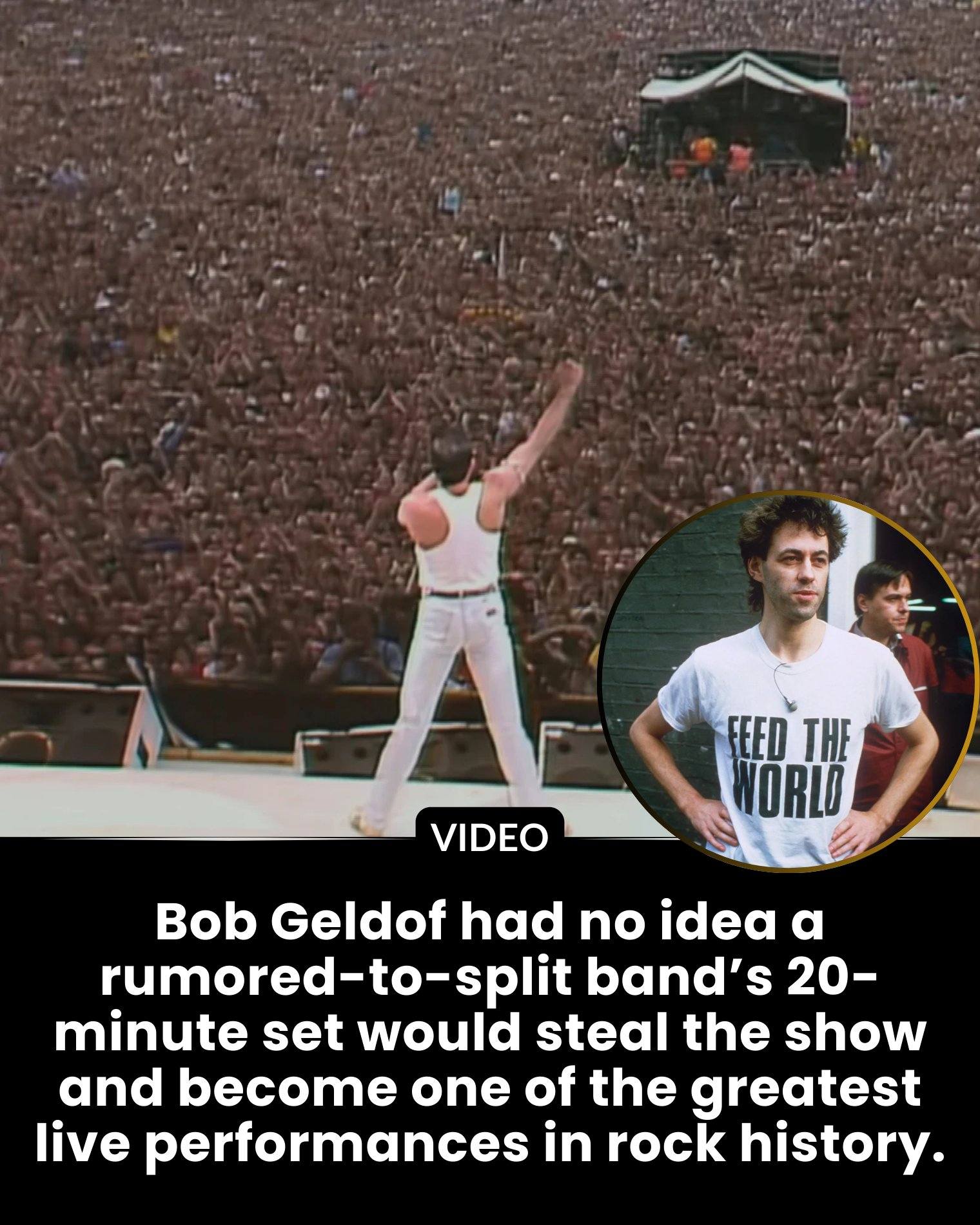
The summer of 1985 was not a triumphant one for Queen. Behind the scenes, the band was fraying. They hadn’t toured in four years. Their recent album, *The Works*, had underperformed. Rumors swirled of solo projects and a looming breakup. In the eyes of many, including Live Aid organizer **Bob Geldof**, they were a band of the past—a great one, but past.
Geldof’s initial instinct was reportedly to veto their inclusion. He needed current, red-hot acts to drive the global telethon. Queen, he feared, were “yesterday’s news.” It was only through persuasion and perhaps a sense of legacy that they secured a perilous 6:41 p.m. slot on the Wembley stage. They had **20 minutes**—not to remind the world who they were, but to prove they still were.
**The Surgical Strike of a Setlist**
Understanding the stakes, Queen didn’t plan a concert; they planned a **hostile takeover**. They crafted a 21-minute setlist that was a masterclass in strategic brilliance:
1. **”Bohemian Rhapsody” (excerpt):** The operatic oddity turned anthem. It showcased their uniqueness immediately, starting with Freddie alone at the piano, then erupting into the hard rock section.
2. **”Radio Ga Ga”:** A recent hit with a simple, unifying clap-along chorus. It was chosen not for artistic vanity, but as a weapon of mass audience participation.
3. **”Hammer to Fall”:** A hard-rocking Brian May vehicle that delivered pure, unadulterated guitar power.
4. **”Crazy Little Thing Called Love” / “We Will Rock You” / “We Are The Champions”:** A triple-encore medley of their most undeniable, crowd-commanding stadium chants.
**The Alchemy of the “Ay-Oh” and the Clap**
The set’s legendary status was forged in two specific, alchemical moments.
First, the **”Ay-Oh” call-and-response**. Freddie, sensing a sun-drained, weary crowd, didn’t sing. He conducted. With simple hand gestures and two syllables, he turned 72,000 individuals into a single, tuned instrument, proving his command was absolute.
Second, and most career-defining, was **”Radio Ga Ga.”** As the synthesized intro began, a few fans in the front rows instinctively replicated the clap from the music video. Freddie saw it, encouraged it, and within seconds, **72,000 people were clapping in perfect, thunderous unison.** The sight—a ocean of humanity moving as one—was television gold. It was the ultimate visual and emotional symbol of what Live Aid was about: global unity. In that moment, Queen didn’t just play to the crowd; they **became** the crowd.
**The Aftermath: From Suspects to Sovereigns**
As they left the stage, the narrative was irrevocably shattered. The “past-their-prime” rumors were incinerated in the white heat of their performance. They were instantly reborn as rock’s ultimate live act. The performance was later voted the **”Greatest Live Gig in Rock History”** by musicians and critics alike.
Bob Geldof’s near-veto became one of music history’s greatest ironic footnotes. Queen didn’t just use their 21 minutes; they weaponized them. They understood that on a day about global connection, the band that could most powerfully connect with a stadium—and, through the camera, a world—would own the day. They didn’t just save their career; they **eternally cemented their legend**, proving that greatness isn’t about where you are in your career, but what you do with the moment you’re given.