# **Conquistadors of Sound: How Queen’s 1981 South American Tour Rewrote the Rules of Rock**
In 1981, the music industry’s map had a glaring, unquestioned blank space: South America. Major rock acts simply didn’t tour there. The reasons were a litany of accepted wisdom: political instability, military dictatorships, economic volatility, logistical nightmares, and a presumed lack of a market for massive, technologically complex stadium rock. It was considered impossible, unprofitable, and perilous.
Queen, fresh off the monumental success of *The Game* and riding the unprecedented, disco-fied high of “Another One Bites the Dust,” looked at that blank space and saw not a barrier, but a **frontier.** They didn’t just want to play a show; they wanted to **conquer a continent.**
**Defying the Impossible**
The band, led by the indomitable will of their manager Jim Beach and Freddie Mercury’s unquenchable desire to play for every soul on the planet, plunged into the chaos. They navigated byzantine bureaucracies, volatile currencies, and political tensions that had other bands booking flights home. Their stage, a behemoth of lights and sound, was shipped across oceans to places that had never seen its like.
**The São Paulo Earthquake**
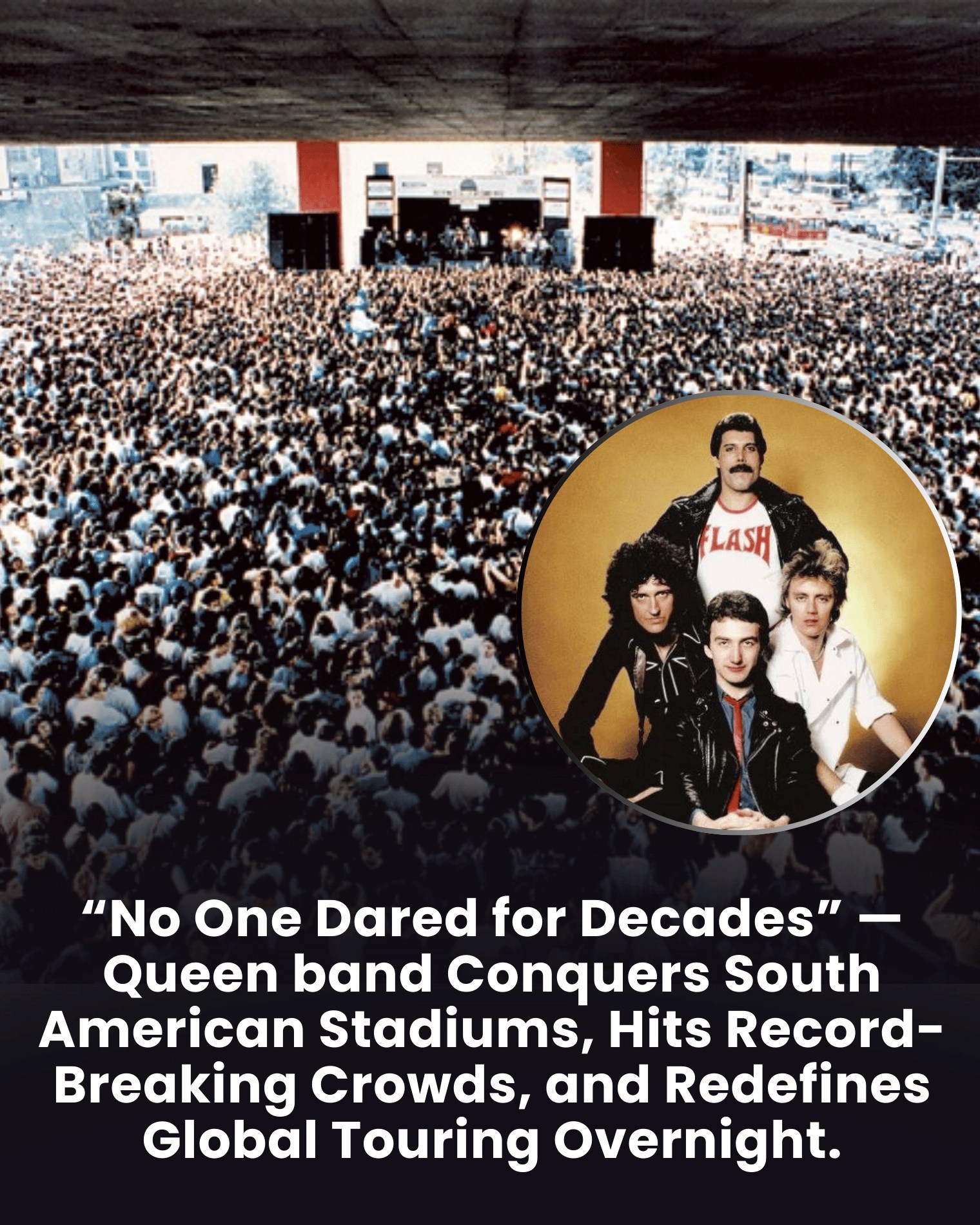
The apex was the **Morbidão** in São Paulo, Brazil. On March 20-21, 1981, Queen performed to a crowd officially recorded as 131,000 and 120,000 on consecutive nights—figures that are the stuff of legend, with some estimates and claims running far higher. The true number may be lost to history, but the impact is not.
What happened there was more than a concert; it was a **cultural and logistical big bang**:
* **Scale:** They proved a single rock band could draw a third of a million people in one weekend in South America, shattering every preconceived notion about audience size.
* **Production:** They demonstrated that their state-of-the-art “pinball wizard” light show and crystal-clear sound could not only be transported but could operate flawlessly, setting a new technological standard for the region.
* **The Human Tide:** The sight of those vast, pulsating seas of humanity, singing every word to “Bohemian Rhapsody” and “Love of My Life,” sent an irreversible message to the global music industry: **This audience exists. They are ravenous. They are here.**
**The Ripple That Became a Wave**
The *Rock in Rio* festival, which would define the continent’s music scene for decades, was directly inspired by Queen’s success. Promoters now had proof of concept. Bands now had a roadmap. The 1981 tour didn’t just open a market; it **integrated South America into the global rock circuit.**
Queen went to South America not as tourists, but as **pioneers.** They played with the same ferocity and precision as at Wembley or Madison Square Garden, bestowing upon the audience not a scaled-down version of a show, but the real, magnificent thing. In doing so, they performed an act of profound respect—and in return, they were met with a volcanic outpouring of love that rewrote their own legend.
They didn’t just break records for the highest-paying audience or the largest crowd. They broke the **psychological barrier** that had kept rock music’s biggest dreams confined to the Northern Hemisphere. They proved that the power of a great song and a fearless performance could bridge any geopolitical divide. What happened in São Paulo in 1981 wasn’t just a concert. It was the moment rock and roll truly went global.