# **The Unmeasurable Instrument: The Science Behind Freddie Mercury’s Magic**
Long after the final note of “The Show Must Go On” faded, a different kind of investigation began. While fans carried the feeling of his voice in their hearts, a team of researchers in 2016 set out to do the impossible: **quantify the unquantifiable.** They subjected studio masters, isolated vocal tracks, and even rare interview snippets to spectral analysis and acoustic modeling. What they found was not just a great singer, but a **biological and acoustic anomaly.**
**The Anatomy of a Phenomenon**
* **The Subharmonic Roar:** The study confirmed Mercury possessed a rare, almost freakish ability to produce **subharmonics**. This occurs when the ventricular folds (or “false vocal cords”) vibrate along with the true vocal folds, generating a frequency an octave below the primary pitch. It’s a technique common in Tuvan throat singing but virtually unheard of in Western rock. This wasn’t a stylistic choice; it was a **physiological superpower** that gave his belted notes—like the climax of “Somebody to Love”—their signature, brass-like, roaring depth, a sound that seemed to emanate from his entire being.
* **The Dangerous Vibrato:** His vibrato was his nervous system set to music. Clocking in at an unusually fast and **irregular 7.0 Hz** (compared to the operatic standard of 5.4-6.9 Hz), it wasn’t the controlled, predictable oscillation of a trained classical singer. It was wilder, more tremulous—a shimmer of raw, unchecked emotion. This “vibrato of vulnerability” is what made sustained notes in “Love of My Life” feel intimately fragile and notes in “Bohemian Rhapsody” feel perilously alive.
* **The Baritone Who Sang Like a Tenor:** Crucially, the research showed Mercury was a **natural baritone** who consistently sang in the tenor range through sheer muscular control and technical ingenuity. He lived at the absolute upper limit of his physiological capacity, pushing his voice into a zone of perpetual, thrilling risk without the safety net of a naturally higher placement. This constant negotiation with his own limits is what gave his performance its unparalleled intensity.
**The Ultimate Truth: Feeling Over Physics**
The most profound conclusion of the science wasn’t in the data, but in the caveat: **Freddie almost certainly had no conscious knowledge of these mechanics.** He wasn’t a technician; he was a conduit. The subharmonics, the frantic vibrato, the baritone-tenor tightrope walk—these were not calculated effects. They were the **symptom of a total, fearless emotional surrender to sound.**
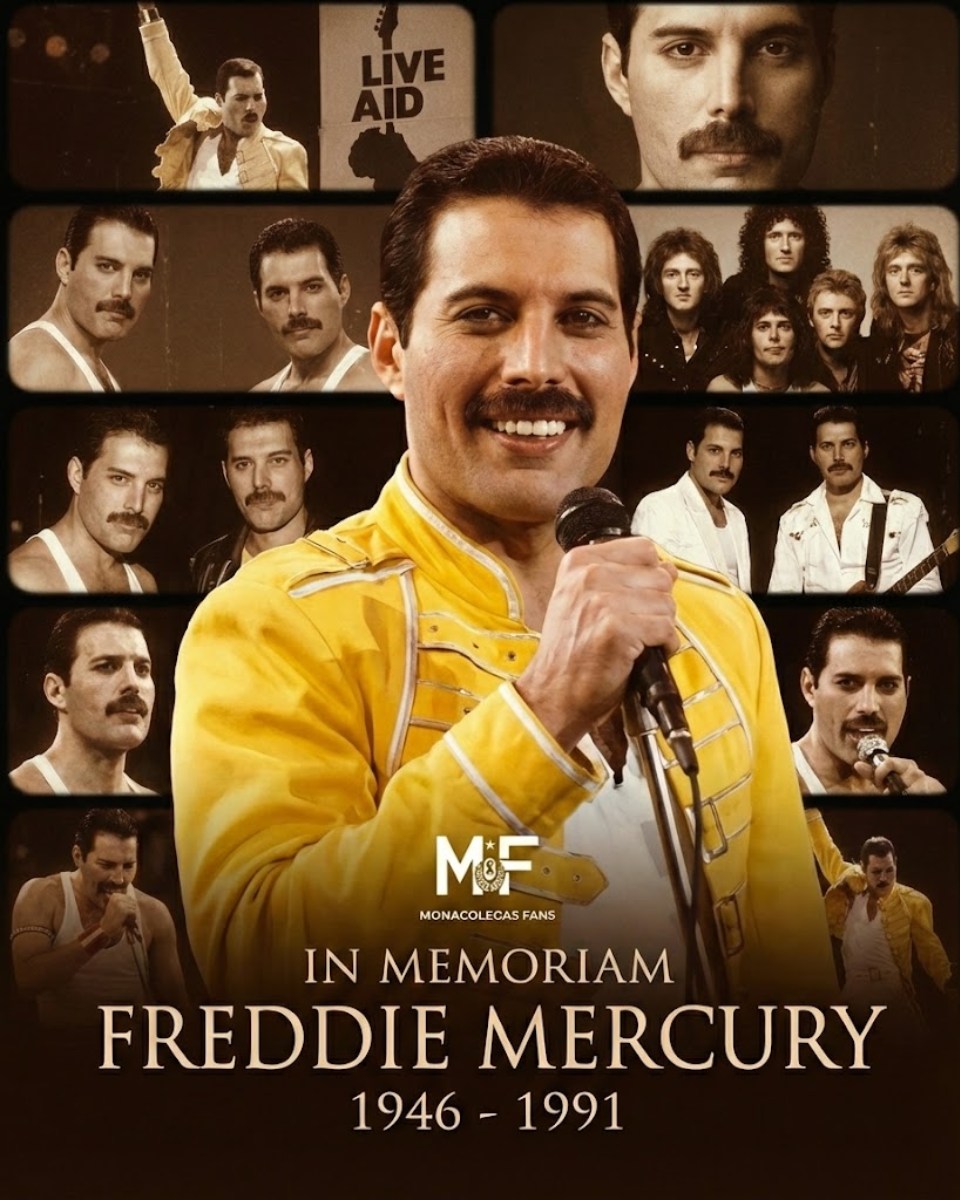
Science, in its late arrival, didn’t create the legend. It simply provided the footnotes for a miracle we had already heard. It confirmed that Freddie Mercury’s voice wasn’t just skilled or powerful; it was a **unique event in the intersection of biology, physics, and soul.** He didn’t follow the rules of singing. He rewrote them in real time, leaving behind not just songs, but a permanent, dazzling question mark on the limits of the human instrument. The echo refuses to fade because it was never just a sound—it was evidence of a different kind of physics, where emotion becomes frequency, and magic becomes fact.