# **The Fortress of Silence: How Freddie Mercury Redefined Fame by Building Walls**
At the peak of his global superstardom, Freddie Mercury was under siege. The British tabloids, sensing a golden goose in his flamboyance, his mysterious personal life, and his immigrant background, laid a constant siege to his existence. The headlines were cruel, the speculation vicious, the pursuit relentless. The expected response from a star was engagement—denials, lawsuits, carefully managed leaks.
Freddie chose the opposite. He chose **absolute, magnificent silence.**
He didn’t just avoid the press; he enacted a policy of **total non-engagement**. While the tabloids shouted questions at his gates, he built his world higher and stronger within the walls of Garden Lodge. What the public and press perceived as a reclusive retreat was, in fact, a **deliberate and powerful act of defiance.**
**The Philosophy of the Fortress**
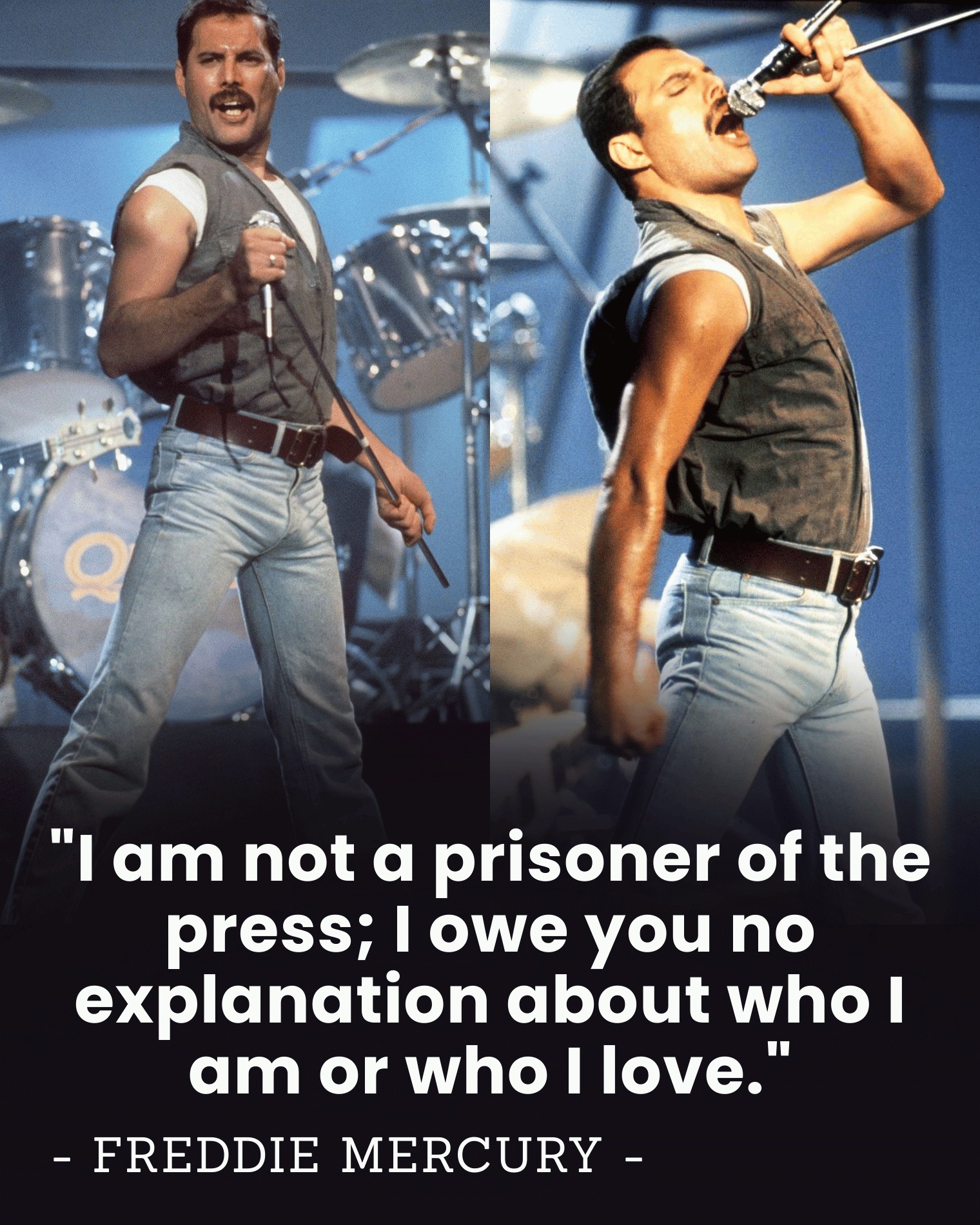
His stance was crystallized in his reported, blistering attitude: ***”I owe you nothing.”*** This wasn’t just about hiding; it was a radical renegotiation of the celebrity contract. He believed his art—the albums, the seismic live performances—was the transaction. Everything beyond that, his heart, his home, his friendships, his loves, belonged to him. By refusing to feed the beast of public curiosity with personal morsels, he asserted that **fame did not grant ownership of the self.**
**The Architecture of Privacy**
Garden Lodge became the physical manifestation of this philosophy. It wasn’t a hidden cottage; it was a palatial, beautiful fortress in plain sight. He curated a paradise within—lush gardens, cherished art, a sanctuary for his cats and his closest friends. The message was clear: *Here is my world. You may know it exists. You will never be invited in.* He controlled the narrative by refusing to have one, forcing the focus back where he believed it belonged: on the music.
**The Lasting Impact**
Freddie Mercury’s silent stand was revolutionary. It proved that in the face of insatiable public demand, the most powerful statement could be **a sustained, elegant “no.”** He severed the link between accessibility and relevance, demonstrating that an artist’s mystery could be a source of power, not suspicion.
He redefined dignity in the public eye, showing it was not only possible but essential to **compartmentalize the icon from the man**. In doing so, he set a precedent for future artists, granting them permission to build their own walls, to say “this is not for you,” and to understand that the ultimate control in a life of exposure is the control of what you choose to withhold.
His silence wasn’t a surrender to the tabloids. It was a **war won by refusing to fight on their terms.** He changed the game forever, leaving a legacy that thunders: you have the right to your own life, and the greatest performance of all can be the one the world never gets to see.