# **The Final Bow: How Freddie Mercury’s Last Act Redefined Courage**
In the hushed, private world of Garden Lodge in November 1991, Freddie Mercury was preparing for his final exit. The world saw only the public silence, the gaunt tabloid photos, the fevered speculation. Inside, the greatest performer of his generation was staging his most consequential act—not with a microphone, but with a statement.
**From Stigma to Statement**
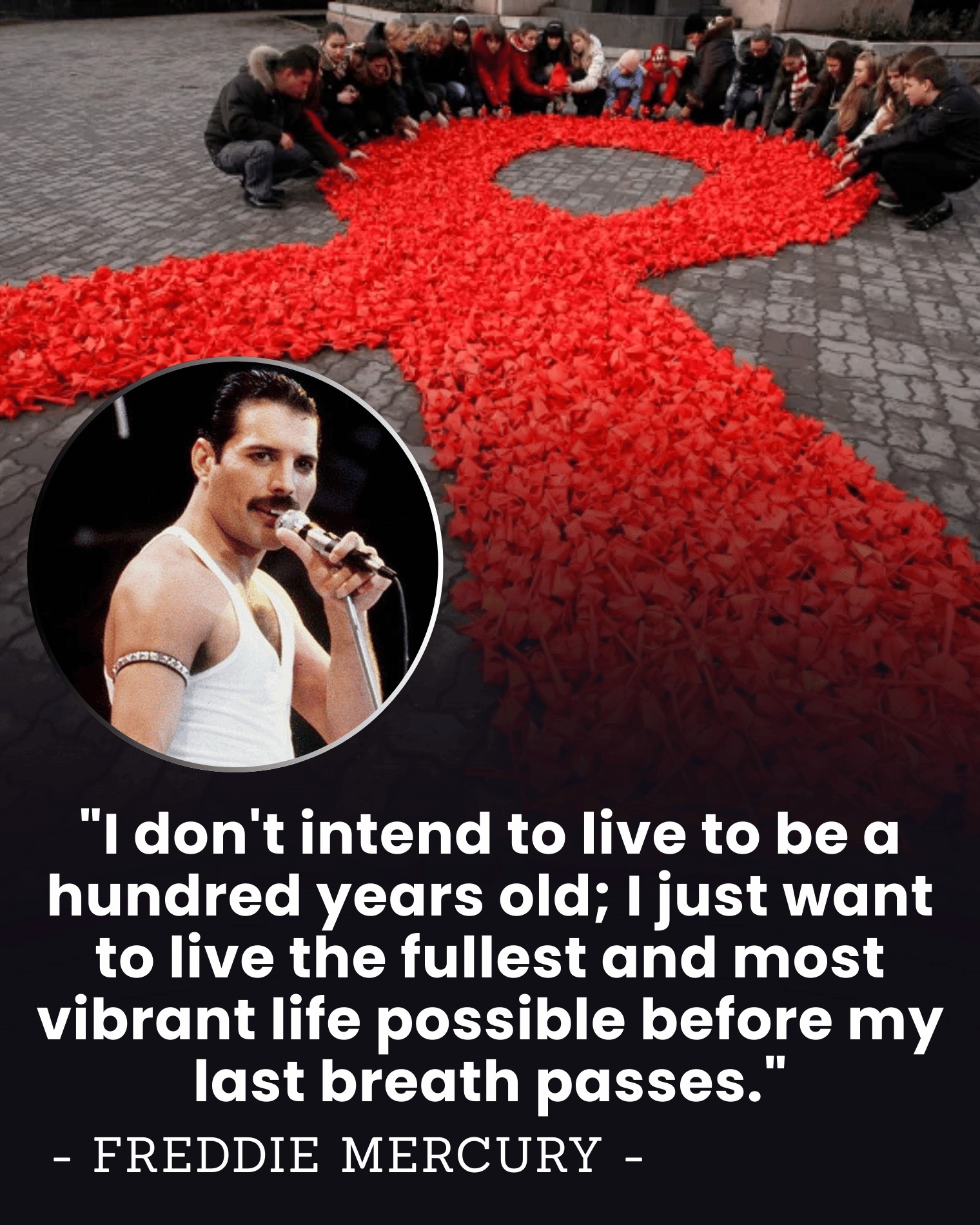
Just 24 hours before his death, Freddie Mercury released a public statement to the press. In a few, stark sentences, he confirmed what the whispers had shouted: he had AIDS. With this, he performed a profound and deliberate inversion. He took a diagnosis shrouded in stigma, shame, and sensationalism and **seized the narrative**. He didn’t allow his illness to be a secret to be uncovered; he made it a truth to be acknowledged on his own terms.
**The Compulsion: A Legacy of Protection**
What compelled this last, fearless act was not a desire for sympathy, but a **fierce, protective love**. He had watched friends and community members suffer in silence and shame. He understood his platform—his immense, global fame—was a tool. By speaking, he could disarm the weapon of gossip and transform his own tragedy into a shield for others. It was a final act of leadership, using his personal truth to flood a dark subject with light, urging compassion over fear, and research over ridicule.
**The Unbreakable Legacy: Changing the Fight**
The impact was immediate and seismic.
1. **Shattering Stigma:** In an era when AIDS was widely (and hatefully) labeled a “gay plague,” Freddie’s statement forced a mainstream, global audience to confront the disease with a human face—one they loved and admired. It became impossible to dismiss the pandemic as a distant “other.”
2. **Fueling the Fight:** His death, and the dignified way he framed it, became a catalyst. Donations to AIDS charities, notably the Terrence Higgins Trust, surged. The **Mercury Phoenix Trust**, founded by his bandmates, has since raised millions for AIDS research and awareness, directly continuing his final wish.
3. **A Blueprint for Dignity:** He provided a model of grace under the most brutal circumstances. He showed that one could face a terrifying illness with courage, retain control over one’s story, and use one’s final act not for vanity, but for advocacy.
Freddie Mercury’s last stand wasn’t a confession. It was a **declaration of humanity**. He turned his final curtain call into a global teachable moment on dignity, compassion, and responsibility. He didn’t just leave a musical legacy; he ignited a humanitarian one, proving that the most powerful note he ever held was the unwavering note of truth, sustained right to the end. His final act didn’t just change the fight against HIV; it forever linked the fight for health with the fundamental right to face it without shame.