# **The Unfinished Symphony: Inside McCartney’s Intimate Netflix Return**
The trailer opens not on a stage, but on a quiet kitchen. An old, silent piano sits in the corner. Paul McCartney’s voice, unadorned and thoughtful, floats over the image: **“You don’t think about forever. You think about getting through the afternoon.”**
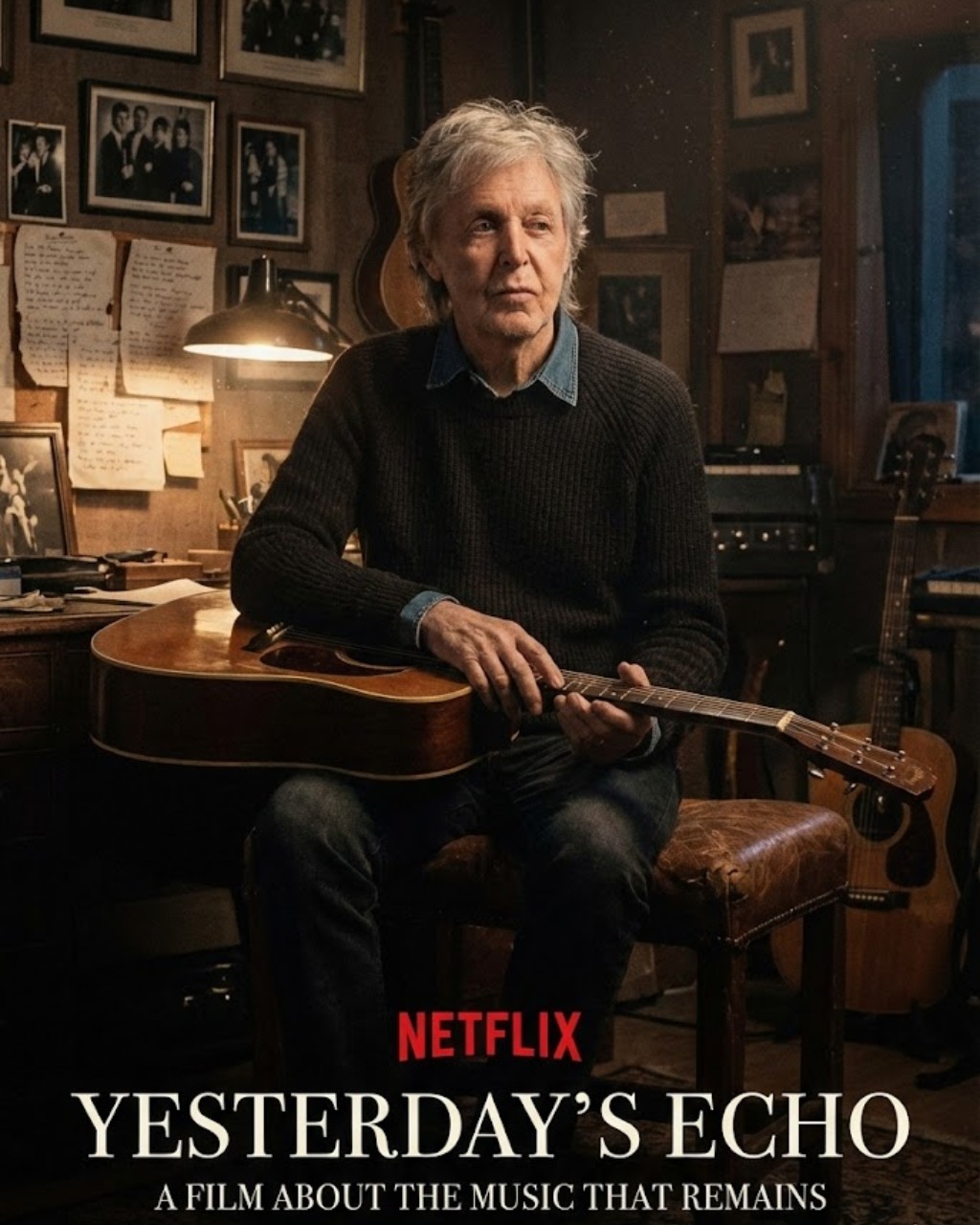
With that simple, disarming admission, Netflix’s new documentary, *McCartney: A Song’s Life*, establishes itself as something profoundly different. This is not a chronicle of conquests. It is a **quiet excavation**—a man walking back through the rooms of his own memory to find where the music was first breathed into life.
The film meticulously avoids the well-trodden path of Beatlemania and stadium glory. Instead, its camera lingers in the interstitial spaces: the empty Liverpool alleyways that held the echo of a teenage chord, the Highland cottage where solitude birthed “Mull of Kintyre,” the home studio where the raw grief for John Lennon transformed into the gentle dialogue of “Here Today.” The archives are less about screaming crowds and more about scribbled lyrics on the back of an envelope, a fleeting look of doubt in a recording booth, the silent concentration of crafting a bassline that would, itself, become a heartbeat.
At the heart of the narrative is McCartney’s stunning, offhand revelation: **“I never wrote them to last forever.”** It’s a statement that reframes his entire canon. These were not monuments he was building; they were **messages in bottles**—crafted from the immediate stuff of life: a tiff with Jane Asher, the warmth of a Scottish evening, the comforting voice of his mother in a dream. Their immortality was never the intent; their honesty was.
And that, the documentary suggests, is precisely why they *have* lasted. Because they were forged in the authentic, vulnerable fires of specific human experience—loneliness, joy, curiosity, love—they became universal vessels. A song written to soothe a personal worry (“Let It Be”) became a global hymn of resilience. A melody plucked from a dream to solve a creative puzzle (“Yesterday”) became the most-recorded song in history. The film posits that we are not clinging to nostalgia, but **rediscovering companionship**. In a fractured, digital age, these songs remain analog anchors of shared feeling.
The documentary’s power lies in its quiet focus on the **alchemy of the ordinary**. It shows us that “forever” was not the goal. Being true to a single, fleeting moment was. And in that truth, somehow, forever quietly took care of itself. The film suggests we are only now beginning to understand the full scope of this legacy—not as a soundtrack to the past, but as a **living language for the present**, a gentle, enduring proof that the most personal work is often the one that finds its home in the hearts of strangers, generation after generation, forever unfinished, forever alive.