The Sound of Silence: How Paul McCartney Mourned in the Key of Memory
When the news broke on December 8, 1980, it shattered more than a peace; it shattered a mirror. For Paul McCartney, John Lennon’s murder wasn’t just the loss of a friend, a collaborator, or a rival. It was the silencing of the voice that had answered his for over two decades—the other half of a conversation that had written the soundtrack of a generation.
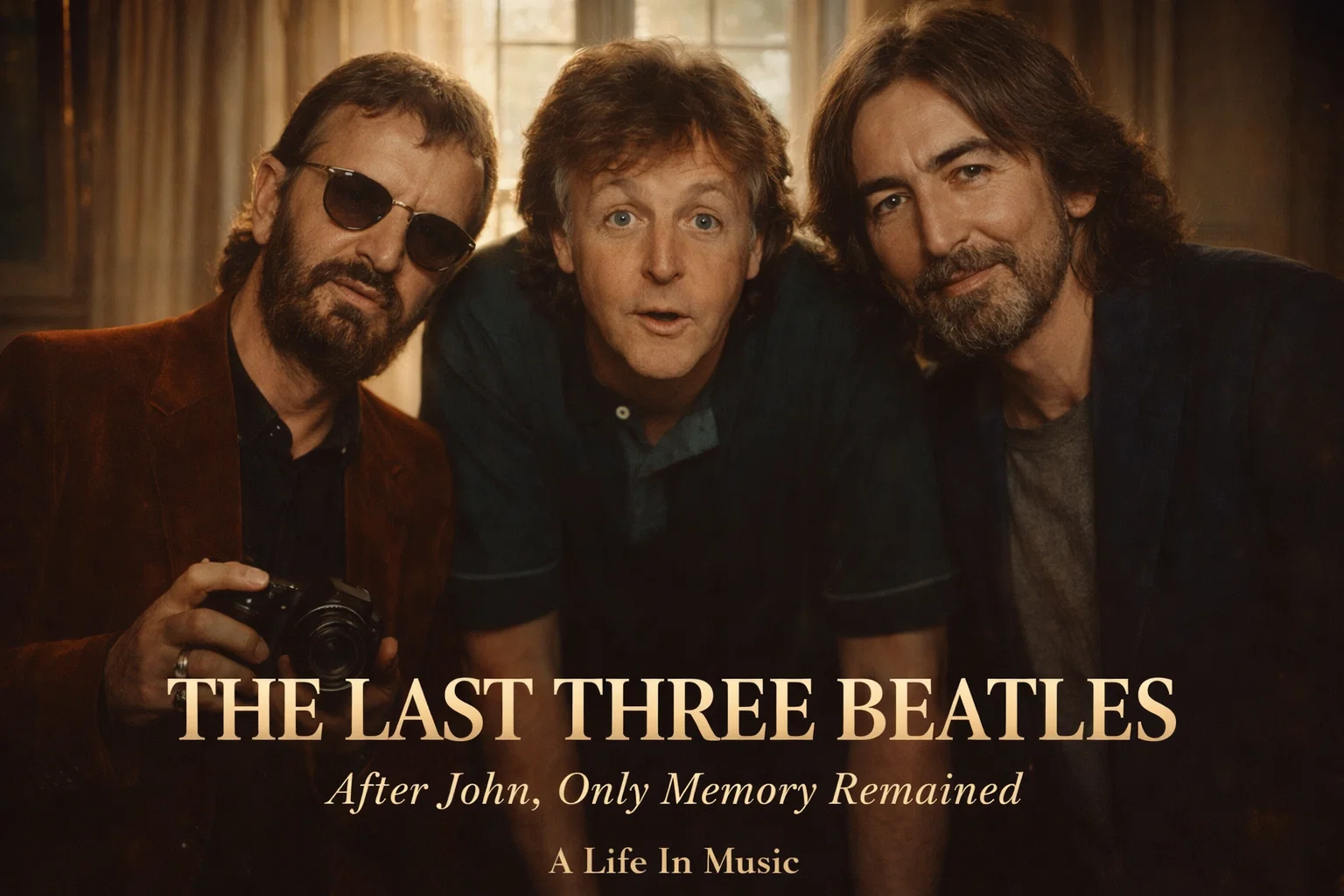
While George Harrison turned inward, seeking solace in the quiet certainty of faith, and Ringo Starr boarded a plane to New York, moving toward the epicenter of the grief, Paul McCartney did what no one expected: he vanished into a profound, protective silence.
He was famously cornered by reporters outside his London home. “What do you think about John’s death?” they shouted. His reply, flat and distant, was torn from a place of pure shock: “It’s a drag.” The words were lambasted as callous, but they were the only ones he could muster from the numbness. He later confessed he couldn’t feel anything at all. “I just went numb,” he said. “I couldn’t grieve.”
For months, he wore black. For years, he could not bring himself to listen to John’s music. The joyous, sparring, brilliant partnership that had fueled their youth and defined their art was now a minefield of memory. To hear John’s voice was to acknowledge the finality of the silence that followed it.
**But Paul McCartney’s silence was not emptiness. It was reverence.**
His mourning was not performed in public statements or grand eulogies. It was conducted in the quiet key of memory and restraint. He mourned by *protecting* what was lost—the raw, unfinished dialogue, the private jokes, the unsaid apologies and unspoken understandings. To vulgarize it with public processing felt like a second betrayal.
When he finally began to speak, it was not in interviews, but in songs. The achingly direct “**Here Today**,” written as a conversation with John, performed with trembling vulnerability. The quiet determination in “**Fine Line**,” walking the edge between despair and moving forward. His grief was translated not into words about John, but into music *for* him—the only language deep enough to hold the complexity of what they shared.
He showed up not with speeches, but with stewardship. He became the quiet curator of their legacy, ensuring the music was preserved and presented with respect, often letting John’s voice and spirit take the lead.
In the end, Paul McCartney taught a masterclass in a uniquely profound form of grief: **grief as guardianship**. His initial, wordless shock was not a failure of feeling, but its deepest expression. He understood that some bonds are too sacred to be summarized, too alive to be buried with public ceremony. His silence was the sound of a man listening for an echo that would never come back, and deciding, finally, to carry the song himself.
The heart breaks at the loss. And it heals, slowly, by learning from the quiet, dignified, unwavering way he chose to honor it—not by closing the book, but by vowing to turn its pages with care for the rest of his life.