Survival on Six Strings: How Brian May Defied a Heart Attack to Reclaim the Stage
In 2020, Queen legend and astrophysicist **Sir Brian May** faced a silence more terrifying than any he’d ever known: the sound of his own heart faltering. A diagnosis of **three severely blocked arteries**—a “widowmaker” heart attack waiting to happen—struck with no warning, despite his rigorous cycling and clean eating. In the sterile quiet of recovery, the message from his own body and a cautious medical establishment was clear: *This is the turning point. It’s time to slow down.*
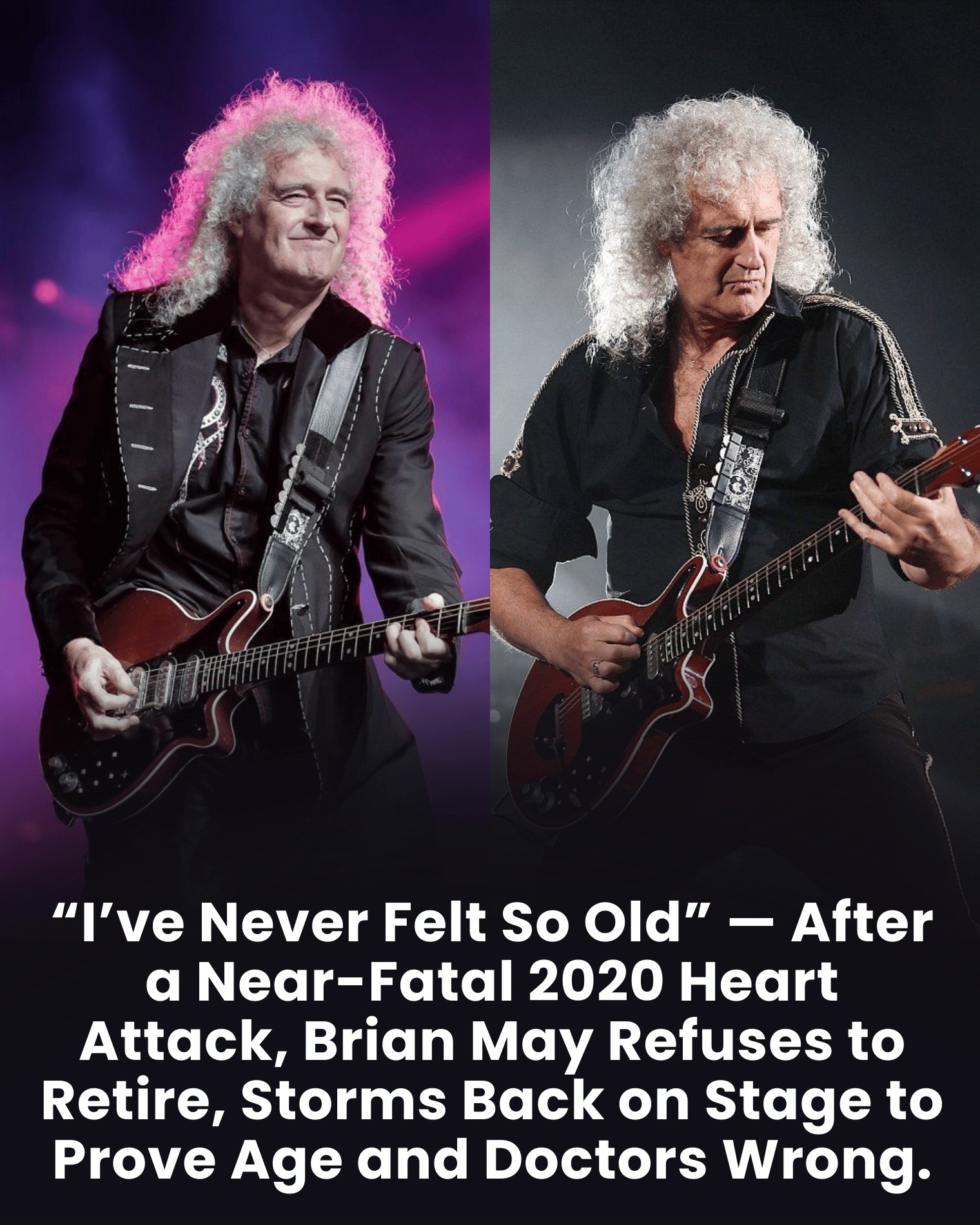
For a man whose life force was channeled through the searing notes of a homemade guitar, slowing down felt like a sentence. “I’ve never felt so old,” he confessed, confronting not just mortality but the societal script that says a cardiac event at 73 should cue a quiet retirement.
His response was not acceptance, but **defiance**.
### ⚡ The Roaring Comeback: Survival as a Statement
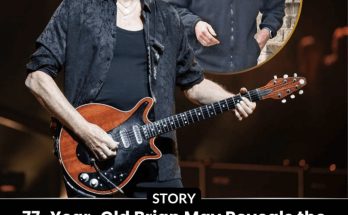
Against implicit advice, May embarked on a grueling rehabilitation, not just to walk comfortably, but to wield his heavy “Red Special” guitar for two-hour rock spectacles. His return to the stage with Queen + Adam Lambert wasn’t merely a tour; it was a **physical and philosophical rebuttal**.
Nights that could have been gentle victory laps became explosions of sound. As he ripped into the solo for “Brighton Rock” or anchored the anthem “I Want It All,” each note was a deliberate act of reclamation. He wasn’t just playing music; he was proving a point: that passion, purpose, and sheer force of will are potent medicines. The sold-out arenas, roaring back at him, became part of his therapy.
### 🛡️ The Battle Beyond the Body: Defying Ageism
May’s fight was on two fronts. The first was against the plaque in his arteries. The second, perhaps more insidious, was against **ageism**—the expectation that after a certain age, and especially after a health crisis, one should recede from the spotlight.
He spoke openly about feeling written off, about the presumption that his best days were behind glass in a museum. By storming back, guitar blazing, he challenged the deep-seated prejudice that equates age with obsolescence and illness with the end of contribution. He reframed survival not as a reason to retreat, but as a **hard-won credential to inspire.**
### 💥 The Legacy of Defiance
Brian May’s post-heart attack chapter is more than a rock star’s comeback tour. It is a **public masterclass in resilient living**.
* **For his fans**, it transformed him from a legendary guitarist into a relatable figure of perseverance, making anthems like “The Show Must Go On” resonate with profound, personal truth.
* **For fellow survivors**, he became a symbol that life after a major health crisis can be defined by ambition, not limitation.
* **For society**, his journey is a loud, amplified argument against defining people by their diagnosis or date of birth.
Brian May refused to let a heart attack become the period at the end of his sentence. Instead, he used it as a **restart**, proving that the most powerful solo he could ever play was the one that shouted, with every fiber of his healed heart, that he was far from finished. In defying doctors and age, he didn’t just save his own life—he played a riff that continues to inspire millions to turn their own survival into their greatest act of defiance.