The Shot, The Shout, The Show: The Defiant Birth of a Final Anthem
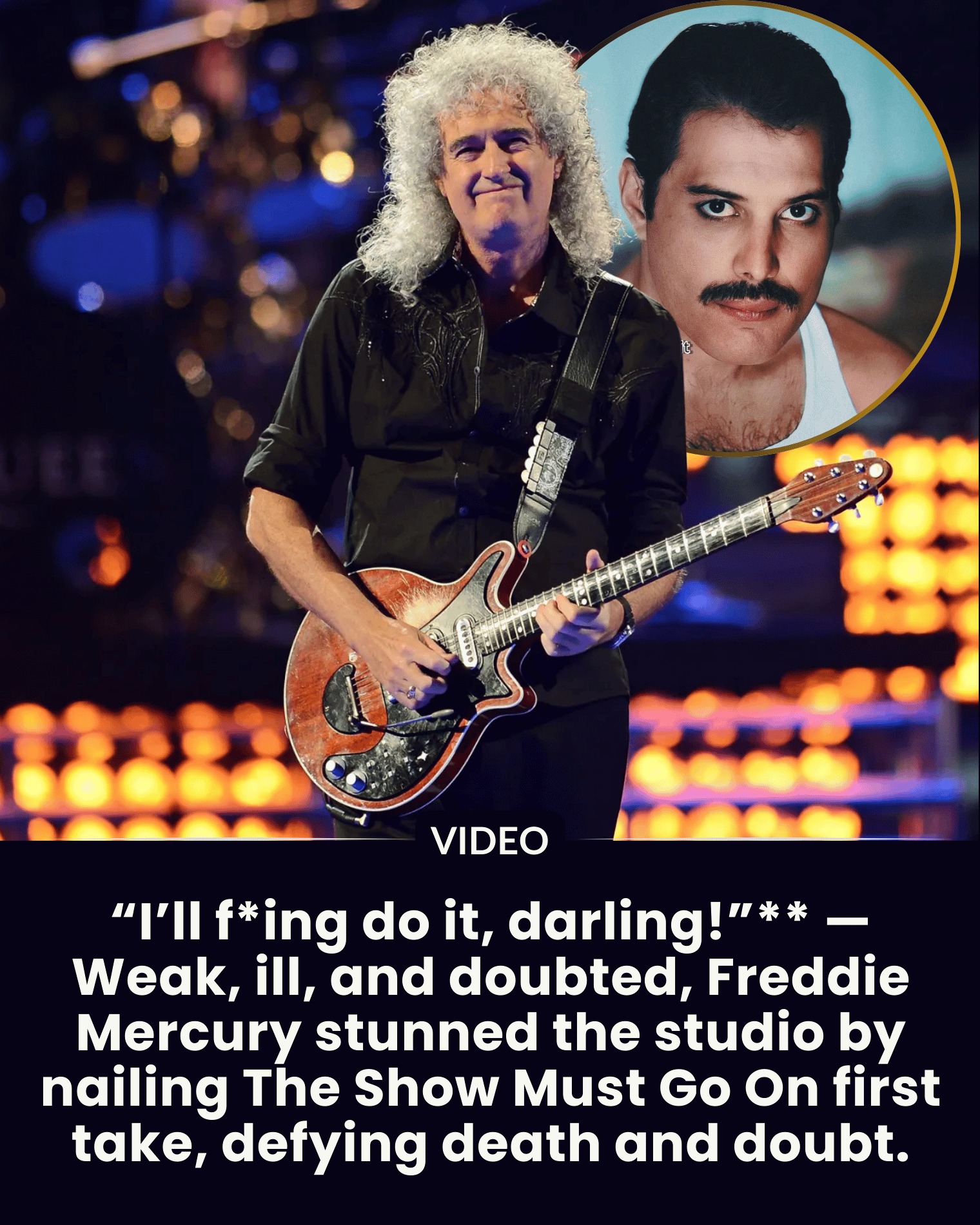
The studio was thick with the unspoken. It was 1990, and Freddie Mercury was a ghost of his former flamboyant self—frail, gaunt, his once-indestructible vitality drained by the illness he still refused to name publicly. Brian May had brought in the skeleton of a song, a monumental, aching piece of music built on a heartbreaking chord progression. It was called **“The Show Must Go On.”**
The track was a mountain. It demanded a vocal performance of Herculean power and operatic despair, soaring from a whisper to a soul-shattering roar. As May played the demo, his heart sank. He looked at Freddie, so physically diminished, and quietly suggested they shelve it. It was too much. It was cruel to even ask.
What happened next is the stuff of rock legend.
Freddie, seated in a corner, listened intently. The fire in his eyes, dampened by pain and medication, began to reignite. He fixed May with a look that cut through the pity and fear. In a voice that was a rasp of its former glory, but burning with undimmed defiance, he uttered the immortal line:
**“I’ll fucking do it, darling!”**
A bottle of vodka appeared. He threw back a shot, not for courage, but as a ritual—a burning cleanse for the vocal cords, a symbolic “fuck you” to the weakness plaguing his body. He walked slowly to the microphone stand, a king approaching a throne he refused to abdicate.
The tape rolled. The opening chords swelled, haunting and grand.
And then, from the depths of his ravaged body, **Freddie Mercury summoned a miracle.**
He didn’t just sing the song; he **lived it.** Every note was a battle, every soaring high note a victory snatched from the jaws of oblivion. The vulnerability in the verse (“My soul is painted like the wings of butterflies…”), raw and exposed, gave way to a pre-chorus of gathering strength, and then erupted into the chorus—a roar of such titanic, heartbreaking defiance that it seemed to shake the very foundations of the studio. He wasn’t performing a lyric; he was issuing a manifesto from the edge of the abyss: *The show must go on.*
He did it in **one take.** A perfect, devastating, once-in-a-lifetime performance. As the final, crashing note faded, the control room was silent, save for the sound of Brian May and producer David Richards weeping openly. They had just witnessed something beyond music. They had witnessed a spirit refusing to be extinguished.
Freddie, exhausted, stepped back from the mic. The fire in his eyes was now a quiet, satisfied ember. He had done it. He had climbed the mountain they thought would kill him, and planted his flag at the summit.
“The Show Must Go On” is more than Queen’s final great single. It is **rock and roll’s most profound act of defiance.** It is the sound of an artist staring down his own mortality and creating a masterpiece from the confrontation. Freddie Mercury didn’t just record a vocal that day.
He built a monument. Not of stone, but of spirit. And with a shot of vodka and a legendary shout, he ensured that as long as music plays, his show—unyielding, glorious, and utterly human—would indeed, go on.