**The Banjo That Almost Broke “Good Old-Fashioned Lover Boy”**
It’s one of Queen’s most playful, charming confections: the vaudevillian piano rolls, the swooning harmonies, the theatrical camp of “Good Old-Fashioned Lover Boy” from 1976’s *A Day at the Races*. Yet at its heart lies a sound that nearly killed the song before it was born—a humble banjo.
As the story goes, during the song’s arrangement, the idea of a ragtime-style banjo part was proposed to add a music-hall cheekiness. Freddie Mercury, the song’s composer, **flatly refused**. He reportedly found the instrument “ugly” and “unworthy” of the track, a piece of rustic Americana that clashed with his vision of glamorous, piano-driven British theatre.
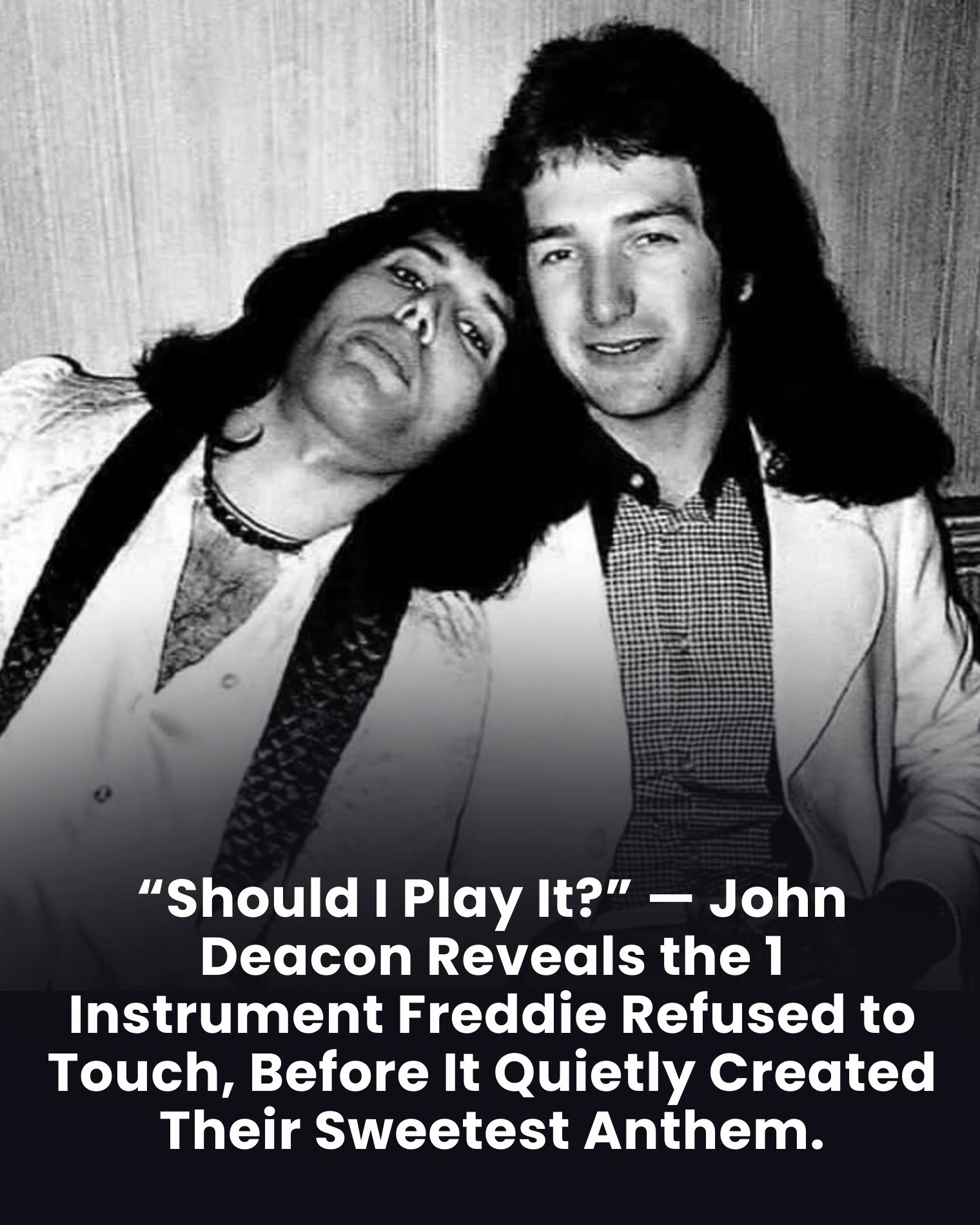
The stalemate could have ended there. The part could have been scrapped. Instead, the band’s quietest member, bassist **John Deacon**, spoke up. Known for his meticulous engineering mind and steady demeanor, Deacon did something extraordinary. He took the banjo home, an instrument he had never played, and taught himself the part note by note.
When the band reconvened, Deacon delivered the precise, plucky, perfectly syncopated riff that skips through the song’s verses. It was not a flashy, dominant line, but a vital piece of rhythmic stitching that gave the track its irresistible, bouncing character. Mercury was convinced. The “ugly” instrument had been mastered and integrated not by a session musician, but by a bandmate who understood the song’s DNA.
This quiet act of stubborn dedication is quintessential John Deacon. The man who wrote the stadium-shaking bassline for “Another One Bites the Dust” was also the problem-solver who, without fanfare, taught himself a new craft to save a song. He wasn’t just the calm at the center of Queen’s storm; he was often the unsung engineer of their most intricate moments.
The anthem you know exists because of that stubborn “no.” But more importantly, it exists because of a quieter, more determined “yes” from the most unassuming member of the band. The banjo on “Good Old-Fashioned Lover Boy” is more than a riff—it’s a testament to Deacon’s indispensable, understated genius, and the collective will that turned a potential fracture into a timeless flourish.