“I’ll F*cking Do It, Darling”: The Vodka, The Note, and Freddie Mercury’s Final Triumph
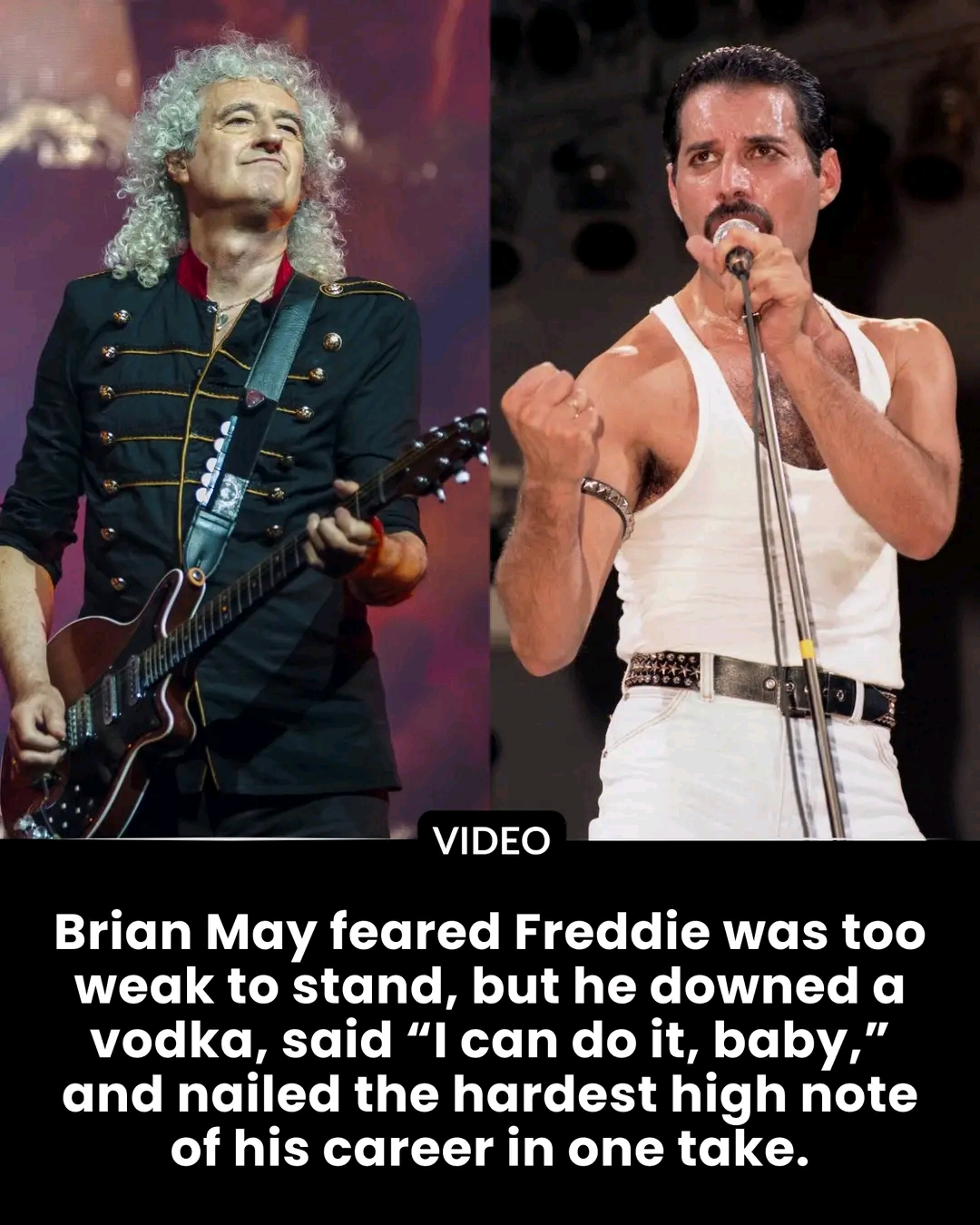
The studio was a sanctuary, but the air was thick with an unspoken, agonizing truth. It was 1990, and Queen was piecing together what would be their final album with Freddie Mercury, Innuendo. The song was “The Show Must Go On,” a monumental, orchestral rock aria penned by Brian May. Its climax demanded a vocal Everest—a sustained, powerful high note that was a physical feat even for a healthy Freddie at his peak.
Brian May looked at his friend. Freddie was frighteningly frail, his body ravaged by AIDS, his energy a finite and dwindling resource. The thought of asking him to summon such Herculean force felt cruel, impossible. With profound care, May voiced his concern, suggesting they might need to work around it, to find another way.
Freddie Mercury fixed him with a look that contained a lifetime of defiance, ambition, and sheer theatrical will. The story, as etched into rock legend by those who were there, goes that he reached for a bottle.
He downed a shot of vodka.
It was not a crutch, but a catalyst—a liquid spark to ignite the fading embers of his physical instrument. Then came the declaration, a line that has become a testament to indomitable spirit: “I’ll fucking do it, darling.”
And then, he sang.
What poured out of him in that take was not just a note, but a manifesto. It was a roar of existence in the face of oblivion. The high note—that terrifying, soaring climax—wasn’t just hit; it was seized, held aloft with a vibrato that trembled not with weakness, but with the sheer, staggering force of will required to produce it. It was raw, it was imperfect, and it was utterly, devastatingly alive.
In that moment, Freddie Mercury did more than record a vocal. He performed the very essence of the song’s lyric. “Inside my heart is breaking / My makeup may be flaking / But my smile still stays on.” He turned his own devastating reality into transcendent art. The vodka wasn’t courage in a glass; it was the prop in the final, greatest performance of his life—a performance where the role was himself, staring down the abyss and choosing to sing into it with everything he had left.
For Brian May, that take is forever sacred and heartbreaking. It is the sound of a friend proving his greatness one last time, at unimaginable cost. It is the definitive proof that Freddie Mercury’s most powerful instrument was never merely his vocal cords, but his unconquerable soul. The note stands forever as a monument: not to a flawless technique, but to the breathtaking courage of a man who, when told he might be too weak to stand, chose instead to fly.