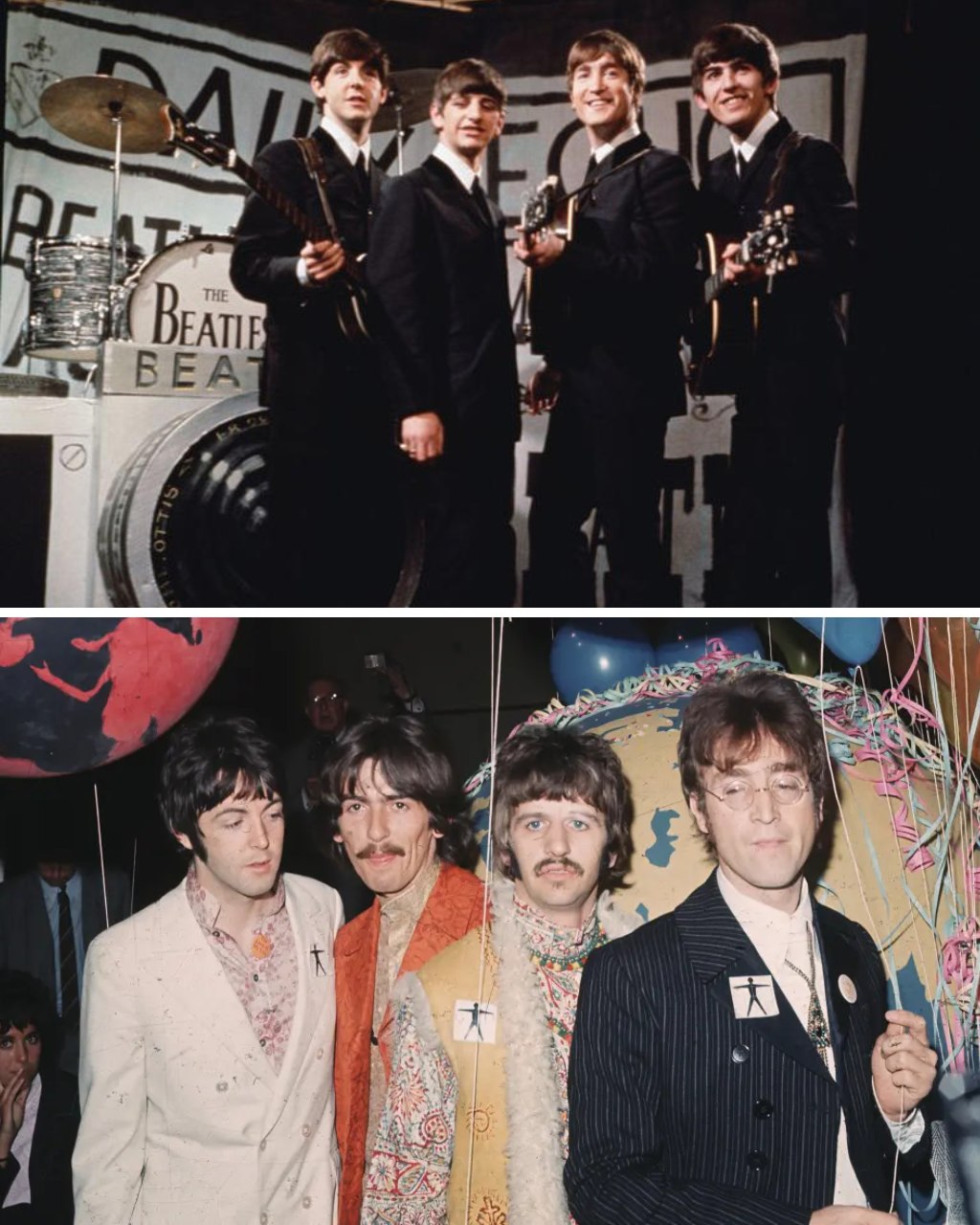
The Reddit debate touches on one of the most beautiful and complex truths about The Beatles’ artistic evolution. This isn’t a “glaring issue”—it’s the very key to understanding their genius.
**The Beatles weren’t just a band; they were a creative ecosystem.**
By the time of *The White Album* (1968), the group was less a traditional four-man rock unit and more a collective of distinct, parallel artistic voices sharing a studio and a brand. Tensions were high, but so was creative ambition. In this context, songs like **“Blackbird”** (McCartney, alone with his guitar and a metronome) or **“Julia”** (Lennon, alone with his acoustic) weren’t exclusions—they were **necessary expressions of a singular vision** that didn’t require, or even benefit from, arrangement by committee.
**Calling them “solo songs wearing a band name” misses the point entirely.** Here’s why:
1. **The Album as a Canvas:** *The White Album*, and later *Abbey Road*, were conceived as **collages**. The patchwork of styles—from the heavy rock of “Helter Skelter” to the pastoral folk of “Mother Nature’s Son”—was intentional. These solo performances provide essential contrast and intimacy, making the full-band explosions feel even more powerful. They are crucial to the album’s emotional and sonic architecture.
2. **The Sanctuary of the Studio:** Abbey Road Studios had become a creative home where any Beatle could work on an idea, with the others free to contribute *if and only if* it served the song. George Martin and the engineers were as much a part of the process as anyone. So, while Ringo might not be on “Blackbird,” the song still benefits from the band’s shared technological playground and the implicit support system of the unit.
3. **The Legacy of the Name:** By 1968, “The Beatles” was no longer just the names of four musicians; it was **a seal of artistic exploration**. A release under that name guaranteed a certain level of craft, experimentation, and cultural weight. A McCartney solo demo in 1968 would have been heard differently than “Blackbird” as a Beatles track. The band’s name gave these fragile, personal songs a protected space to exist and be taken seriously.
**The Verdict:**
These are not lesser Beatles songs. They are, in fact, **quintessential** Beatles songs. They embody the group’s ultimate, revolutionary principle: **the song is king.** If the song demanded a quartet, they became a powerhouse quartet. If it demanded one voice in a quiet room, they had the confidence and humility to step back and let that voice speak.
The true magic of The Beatles lies in this very tension—the push-and-pull between the unified group sound and the fiercely individual voices within it. To dismiss “Julia” or “Blackbird” is to dismiss the band’s courageous artistic maturity. They prove that The Beatles’ greatest strength wasn’t just playing together—it was their profound understanding of when *not* to.