When Rock Met the Stars Again: Brian May’s Unfinished Promise
For most people, global fame is the final destination. For , it was only an intermission.
Before stadiums echoed with guitar solos and millions sang along to Bohemian Rhapsody, Brian May was already chasing something vast—the universe itself. In the late 1960s, he began a PhD in astrophysics, studying the motion of interplanetary dust. But history had other plans. A young band called exploded onto the world stage, and science quietly slipped into the background.
For decades, May lived a life most only dream of: sold-out tours, timeless records, and rock immortality. Yet behind the amplifiers and applause lingered an unfinished chapter. The thesis he never completed. The question he never fully answered—not about space, but about himself.
Years later, when the lights dimmed and the tours slowed, that unresolved promise returned. Not as regret, but as a calling.
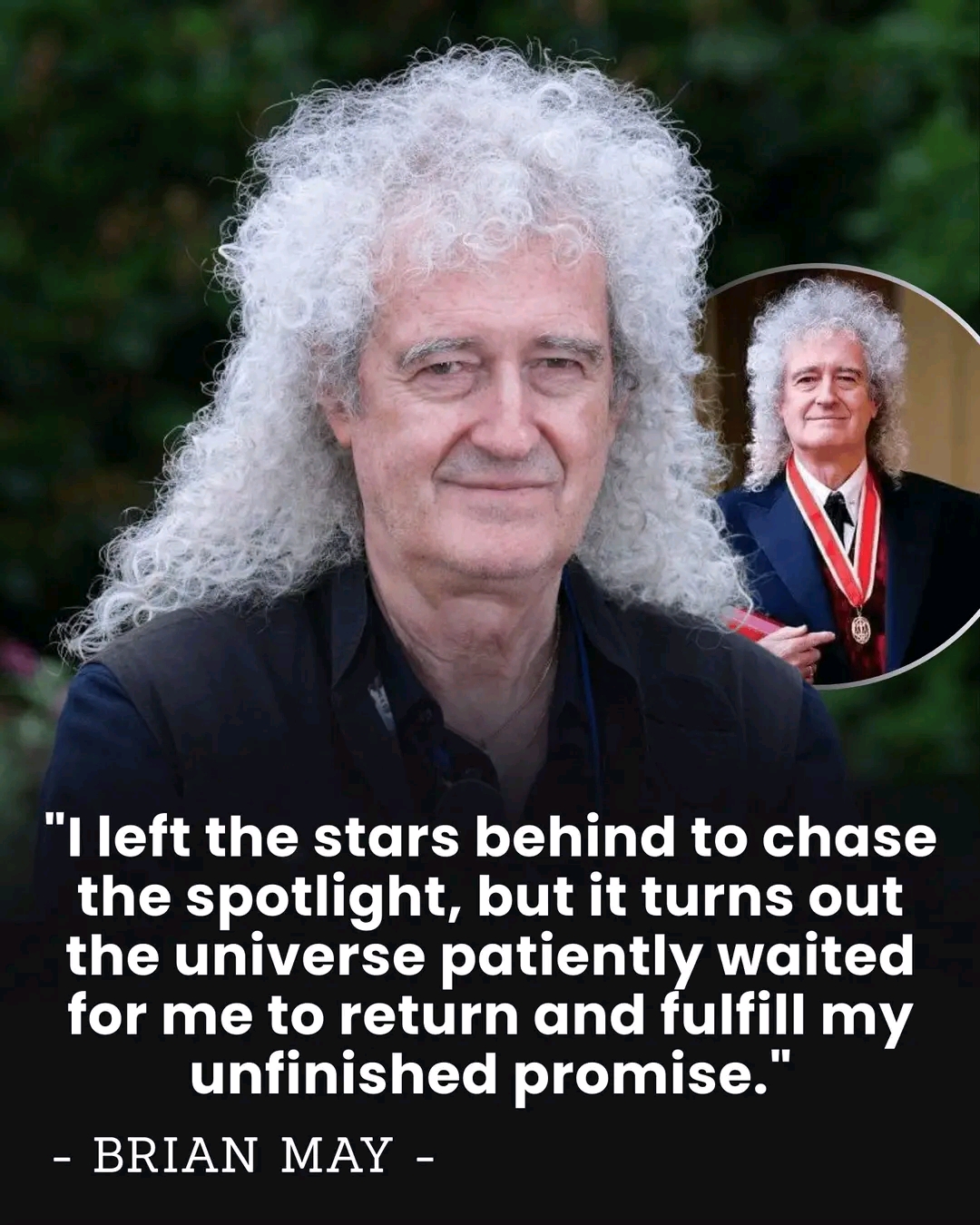
In his 60s, Brian May did something quietly radical. He went back. Back to equations, research papers, and late nights of academic rigor. In 2007, nearly 40 years after he first began, he finally earned his PhD in astrophysics.
There was no encore. No screaming crowd. Just fulfillment.
His journey proves something rare and powerful: success doesn’t erase unfinished dreams. Fame can pause them—but it can’t replace them. Brian May didn’t return to science to prove he could. He returned to become whole.
Because sometimes, the greatest legacy isn’t what the world applauds—but what you finish for yourself.