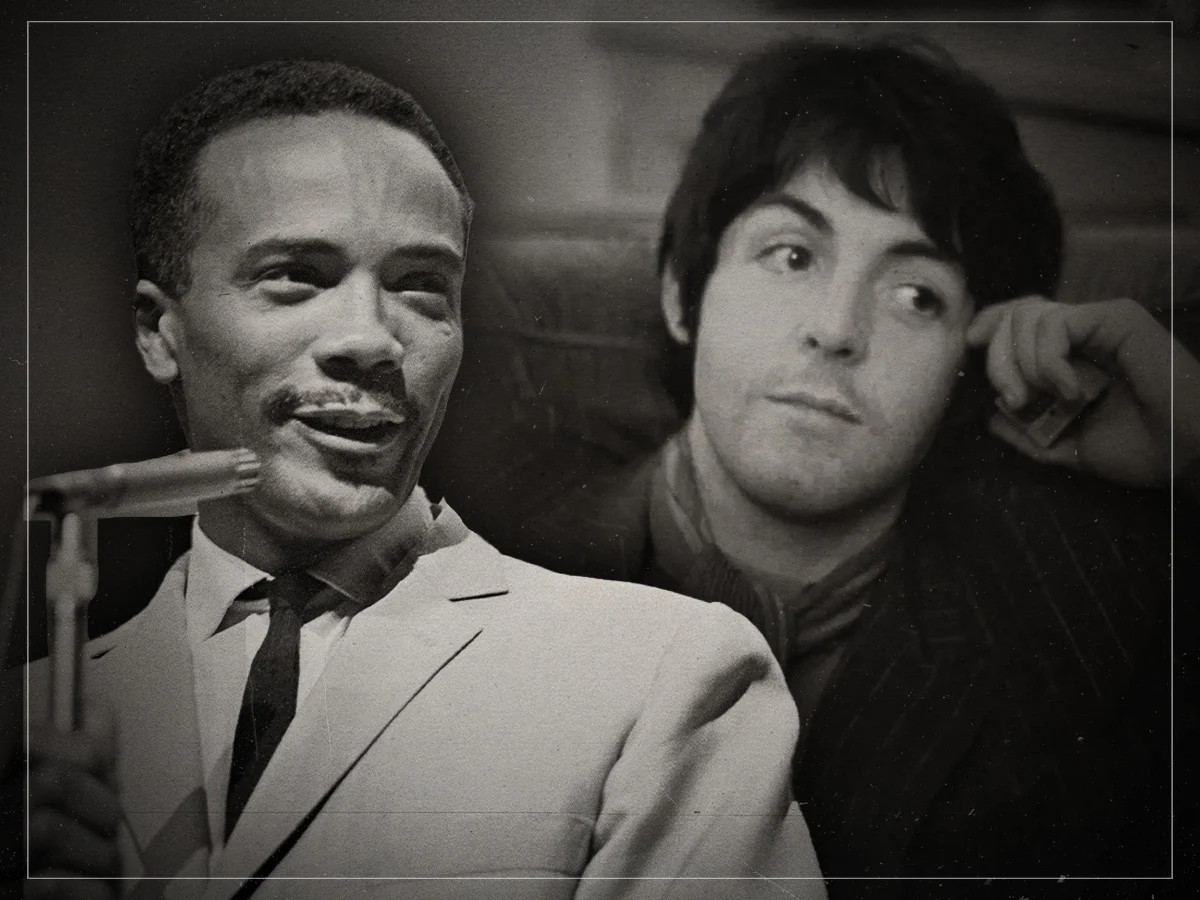
Famously, Quincy Jones never minced his words. But even by his standards, calling Paul McCartney “the worst bass player I ever heard” was a tough one to come back from.
The pair’s so-called feud in 2018, which was admittedly more fiction than reality, could have ended in disaster, but was saved by the fact that, at their heart, they both had a deep-rooted love for one another. When it boiled down to it, they were both perhaps the biggest icons of their respective musical fields, so there had to be a level of appreciation somewhere.
Yet even despite the fact that Jones could fly off at the mouth, the main part of the reason that Macca forgave him, at least in a public capacity, was because he knew his comments about The Beatles being “no-playing motherfuckers” didn’t really stand up to scrutiny. Not only could the producing maestro be proven wrong by their unfathomable success, but he’d also previously said one of McCartney’s albums was among the best he’d ever heard.
In modern parlance, that would be called bringing Jones the receipts of his own words. But in this context, they were actually entirely justified as the man had gone on record, six years prior to that specific incident, calling the former Beatle a “special talent” and saying, “he knows how to swing.” His little future outburst was suddenly having embarrassing repercussions.
But it was absolutely true that Jones had claimed McCartney’s 2012 record Kisses on the Bottom to have “some of the best songs ever written,” mainly because they were the tracks from which he took his most powerful musical education. The album, made up almost exclusively of pop and jazz covers, may not have been original work, but certainly brought some Macca flair to the game.
That puts it in a lot more context when Jones said at the time: “I sat with Paul backstage at the first concert of his recent tour and had the privilege of listening to the entire record. These are some of the best songs ever written, and it takes a very special talent to bring them to light.” He recognised when talent bred talent, and the fact that “he knows how to swing like the old school or Sinatra used to say, ‘he’s in the pocket’.”
Thankfully, Jones did indeed have those comments in his back pocket to use when his more scathing assessment of McCartney and his band started to make headlines for the wrong reasons later down the line. ‘It was all a big mistake!’ – you can imagine he tried to proffer to the Liverpudlian legend down the phone.
And, for reasons unknown but undoubtedly making him a better person than most, McCartney actually believed him and accepted the apology. It was a remarkable act of forgiveness, even when Jones possibly didn’t deserve the sympathy. But if there was one thing that the legacy of John Lennon had taught him, it was to ‘Give Peace a Chance’.
So Jones and McCartney sailed off into the sunset, arm in arm and the best of friends, even if the former had been slightly chastised in the process. Was it an unexpected flash of true colours from the producer, baring his claws but sweetening his smile when he overstepped the mark? It’s hard to say, but it’s not worth causing any more wars over.