73 Million Americans Tuned In — And Pop Culture Was Never the Same Again
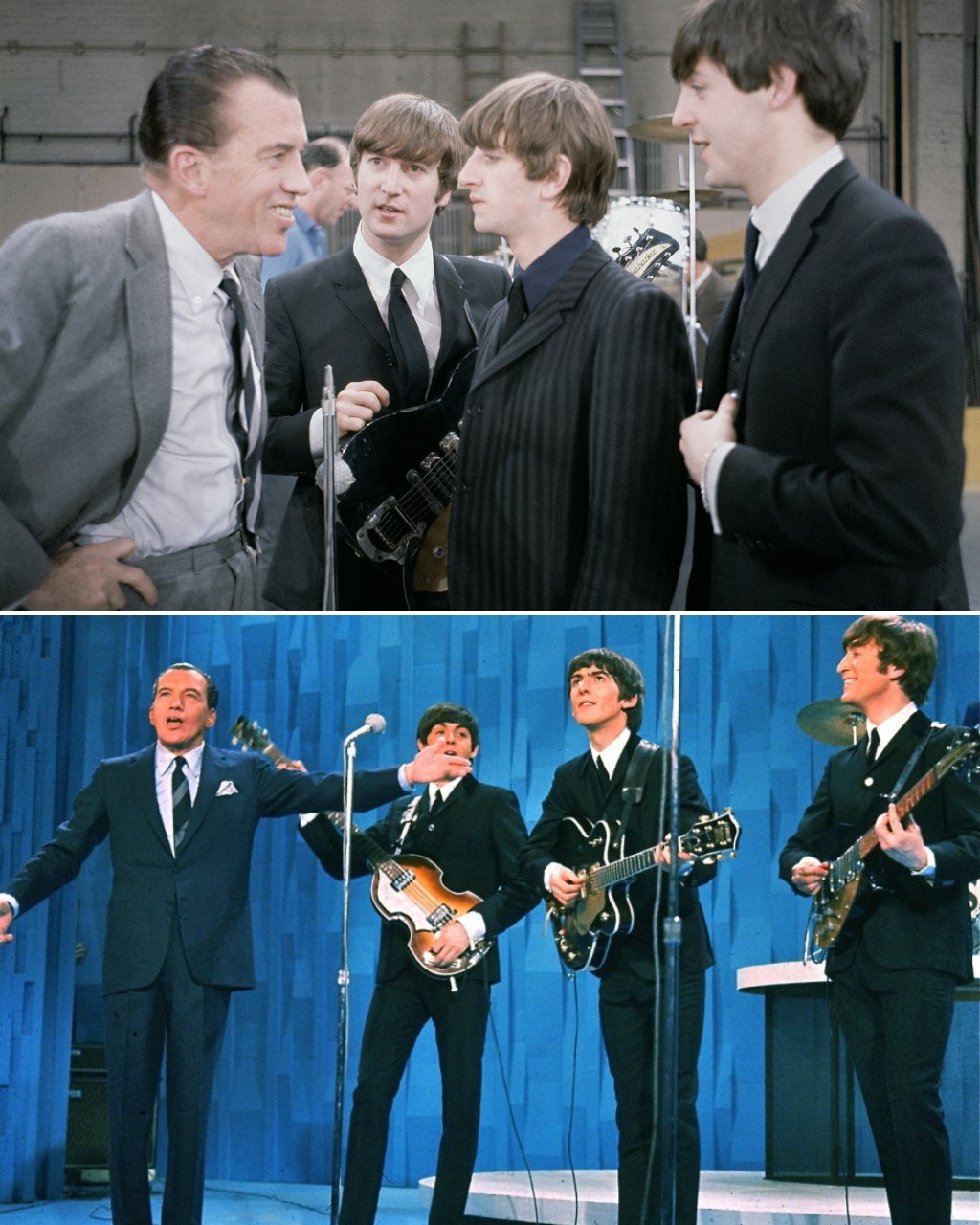
On February 9, 1964, The Beatles took the stage of The Ed Sullivan Show and ignited a cultural explosion. The deafening screams, the uncontrollable tears — in mere minutes, they shattered the boundaries of music, fashion, and youth culture, marking a clear “before” and “after.”
It wasn’t just a performance; it was a cultural detonation.
Seventy-three million Americans watched that night. Nearly half the country. The highest viewership in television history at the time. And what they saw was unlike anything they had experienced before. Four young men from Liverpool, with matching suits and mop-top haircuts, playing music that made teenagers scream and parents shake their heads in confusion.
From their iconic haircuts to the harmonies that would become legendary, from their unshakable attitude to the global hysteria that followed, that night forever redefined what it meant to be a superstar.
Before February 9, 1964, American pop culture was dominated by clean-cut crooners and polished girl groups. The Beatles changed all of it in one evening. They brought energy, irreverence, and a new kind of confidence. They didn’t ask for permission. They simply arrived — and the world adjusted.
Sixty-two years later, the footage still feels electric — raw, chaotic, and undeniably historic. The black-and-white images, the primitive sound, the screaming so loud it nearly drowns out the music — none of it feels dated. It feels like a beginning. The beginning of everything that followed.
And here’s the question that still echoes: would today’s icons even exist if that moment hadn’t rewritten the rules?
Every rock band that followed owed a debt. Every pop star who commanded a stage, every musician who understood that performance was as important as songwriting, every artist who dared to believe that music could change the world — they were all standing on the foundation The Beatles laid that night.
The screams have faded. The hairstyles have changed. But the echo of that evening has never fully disappeared. It lives in every sold-out stadium, every fan who cries at a concert, every musician who picks up a guitar and dreams of something bigger.
Because before The Beatles, pop music was entertainment. After that night, it became something else: a force. A movement. A language spoken by millions who had never met, but who understood the same chords, the same harmonies, the same feeling that something had shifted — and would never shift back.
Seventy-three million Americans tuned in. And pop culture was never the same again.
Neither was the world.