# In Just Seconds, Freddie Mercury Turned Wembley Into an Instrument
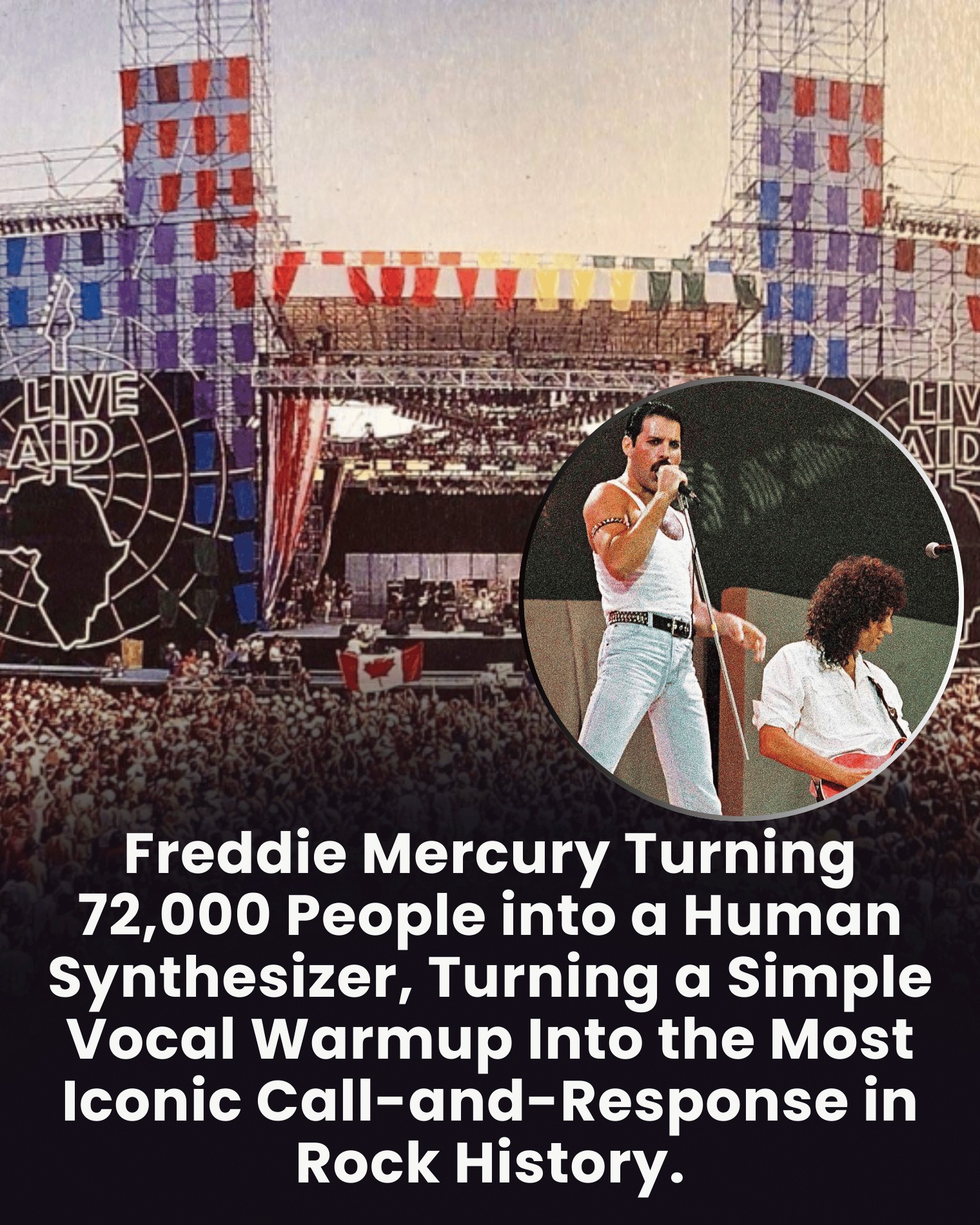
**LONDON, JULY 13, 1985 — The crowd was exhausted. Hours in the sun. Dozens of acts. Then Freddie Mercury stepped to the edge of the stage and raised his fist.**
“Ay-oh!”
Seventy-two thousand voices answered.
He did it again, louder this time. They answered louder. Then Mercury began conducting them like an orchestra — dividing the stadium in half, bringing sections in and out, turning 72,000 tired souls into the largest choir rock had ever seen.
It wasn’t rehearsed. It wasn’t planned. It was Mercury reading a crowd, feeling their energy, and deciding to give it back multiplied. What followed was less a concert and more a communion. For those few minutes, Wembley Stadium stopped being a venue and became an instrument — one that only Freddie knew how to play.
That simple call-and-response became the defining image of Live Aid. A band written off as past their prime, standing on the world’s biggest stage, commanding a quarter of a million hands to clap in unison. Brian May watched from the side, later admitting he’d never seen anything like it. Roger Taylor kept the beat, knowing history was being written.
When the set ended, Queen had done more than perform. They had reclaimed everything. A band deemed irrelevant became undeniable again in the span of twenty minutes.
And it all started with two syllables, a raised fist, and a man who understood that the greatest instrument in the world is a crowd waiting to be led.